
Found 32 cars







Showing 20 / 32 cars
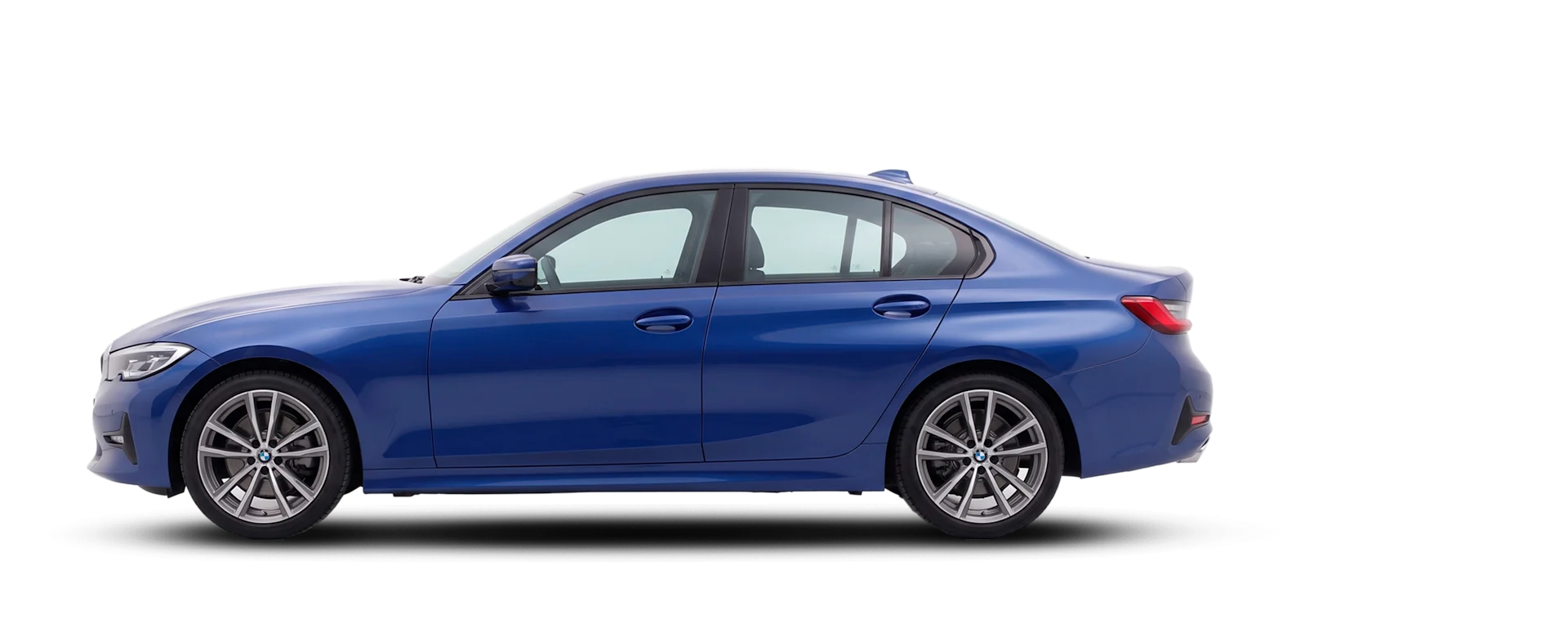
BMW 320
Agile premium sedan
Overview
BMW 320 in Brief
The BMW 320 is the core model of the BMW 3 Series and one of the longest-selling versions in the entire lineup. It represents a perennial favourite among compact premium sedans, where German refinement and a chassis built for driving enjoyment meet in a size that suits everyday use. Within the 3 Series range, the 320 sits between the lighter, less expensive 316 and 318 models and the sportier 330.
As a used car, the 320 is appealing because there's a version to suit almost any need: an economical 320d for long-distance driving, a lighter and more affordable 320i for everyday use, and the newer plug-in hybrid 320e for city driving. In Saka's range, the 320 is one of the most popular individual BMW models, available across a wide range of model years, body styles and powertrains.
You can also browse all of Saka's BMW used cars if you'd like to compare the 320 with other models from the brand.
Who Is the BMW 320 For?
The BMW 320 is an excellent choice when you want a compact premium sedan without paying for the extra performance, or the extra cost, of the 330.
- You enjoy precise handling: the 320 keeps the 3 Series' well-known, sporty driving dynamics even with the entry-level engine.
- You drive a lot and want to keep costs down: the 320d's diesel engine offers plenty of torque and low consumption on long trips.
- You want a more affordable way into the 3 Series: the 320 is typically cheaper than the 330, both to buy and to maintain, while still offering the same premium feel.
- You want electric everyday driving without a full EV's charging commitment: the newer 320e plug-in hybrid makes daily trips possible on electric power alone.
- You need a practical family car: the Touring wagon version combines the 320's driving dynamics with load space suited to everyday use.
- You want a capable winter car: many 320 examples come with BMW's xDrive all-wheel drive.
Price of a Used BMW 320
The price of a used BMW 320 depends in particular on the model year, mileage, powertrain, drivetrain, transmission, equipment, service history and overall condition of the car. Older cars with higher mileage generally sit in a lower price bracket, while newer, low-mileage, well-equipped cars are noticeably more expensive.
BMW 320 used cars listed by Saka are typically priced between roughly €7,500 and €42,000. When comparing prices, it's worth looking beyond the model year at the car's mileage, service history, powertrain, drivetrain and equipment, since prices can vary significantly between cars of the same age.
Model Years and Generations
- 5th generation, E90/E91/E92/E93, 2005-2013: Available as a sedan (E90), wagon or Touring (E91), coupe (E92) and convertible or cabrio (E93). The most affordable option as a used car, though the condition of the diesel engine's timing chain is worth checking carefully.
- 6th generation, F30/F31, 2011/2012-2019: Available as a sedan (F30) and Touring (F31). The facelift introduced around 2015 brought an improved diesel engine in which the timing chain reliability issues were largely resolved.
- 7th generation, G20/G21, 2018-present: Available as a sedan (G20) and Touring (G21). This generation also includes the 320e plug-in hybrid. The 2022 facelift brought an updated look and new instrument cluster options.
If you're looking for a budget-friendly option, it's worth starting with an E90-generation car, as long as the service history and engine condition have been carefully checked. The F30 offers many buyers the best balance between age and price, while the latest G20 generation suits a buyer who values the newest technology and is willing to pay more for it.
Read more about the model on the following tabs!
Technical Specifications
Engines and Powertrains
The BMW 320 is offered with three main powertrain options.
- 320i: a 2.0-litre four-cylinder petrol engine producing roughly 150-184 horsepower depending on generation. A good everyday car that doesn't require the service monitoring of a diesel.
- 320d: a 2.0-litre four-cylinder diesel engine producing roughly 163-190 horsepower. Known for strong torque and low consumption, especially on long trips.
- 320e: the plug-in hybrid of the latest G20/G21 generation. Combines a 2.0-litre turbocharged petrol engine with an electric motor for a combined output of around 204 horsepower. Battery capacity is around 12 kWh, with an electric range typically around 50-60 kilometres depending on model year and measurement method.
Rear-Wheel Drive, All-Wheel Drive, and Automatic Transmission
The BMW 320 is rear-wheel drive by design, which is part of the model's well-known driving dynamics. xDrive all-wheel drive has long been available as an option on most engines and improves grip, particularly in Finnish winter conditions.
Newer models almost always come with an 8-speed automatic transmission. Older E90 and F30 generation cars are also available with a manual transmission, and some of these are still found on the used market.
Dimensions, Boot Space, and Practicality
The E90-generation sedan measures roughly 4,520-4,531 mm in length and 1,817 mm in width, with a boot capacity of around 460 litres.
The current G20-generation sedan measures roughly 4,709 mm in length, 1,827 mm in width and 1,442 mm in height, with a wheelbase of around 2,851 mm. Boot capacity is around 480 litres. In the Touring wagon (G21), boot capacity is around 500 litres with the seats up, rising to as much as 1,510 litres with the rear seats folded down.
Exact dimensions and boot capacity should always be checked against the individual car's registration and technical details, as they vary slightly depending on body style and equipment.
Driving Experience and Top Features
Driving Feel, Driver Assistance, and Safety
The BMW 320 is known for its precise steering feel and stable handling, both in city driving and at motorway speeds. Driving modes such as Eco Pro, Comfort and Sport let you adjust throttle response, transmission mapping and steering feel on the fly. Safety equipment has expanded significantly across generations: the newest models feature adaptive cruise control, lane-keeping assist and collision avoidance systems, while older E90 cars have noticeably more basic safety equipment.
Top Features
- automatic transmission
- xDrive all-wheel drive
- M Sport styling
- LED or xenon headlights depending on generation
- reversing camera and parking sensors
- Harman Kardon sound system
- digital instrument cluster and iDrive interface on newer models
- heated front seats
- tow bar
Buyer's Guide
What to Check When Buying a Used BMW 320
- service history and service book
- condition of the diesel engine's timing chain, especially on cars older than 2015: a common symptom is a rattling noise from the rear of the engine on cold start
- possible carbon build-up on the petrol engine's intake valves, which can show up as rough idling or loss of power
- status of the F30 generation's EGR cooler recall
- oil consumption and any fluid leaks
- transmission operation and any unusual noises
- function of the xDrive all-wheel drive, if the car has one
- condition of the diesel particulate filter (DPF), especially on cars mainly used for short city trips
- condition of the 320e hybrid's battery and charging system
- condition of the brakes and tyres
- warning lights and their cause, if any are lit
- observations from the test drive: engine and drivetrain noises, steering precision and any vibrations
Maintenance and Running Costs
Running costs for the BMW 320 are typical for a premium mid-size sedan: parts and dealer servicing cost more than with mainstream brands, but a wide service network and good parts availability make ownership predictable. Of the three versions, the 320i is usually the cheapest to maintain, since it doesn't carry the extra components that come with a diesel or hybrid powertrain.
Petrol, Diesel, or Hybrid?
The 320i suits a buyer who mainly drives short to medium distances and prefers simpler technology without diesel-specific service items. The 320d suits best a buyer who drives a lot and covers long distances, as it's more economical on the motorway and offers plenty of torque. The 320e plug-in hybrid suits a buyer who can charge at home and drives a lot of short, daily trips where the electric range is enough.
Which Version Should You Choose?
- Cheapest way into the 3 Series: an E90-generation 320i or 320d.
- Best balance of age, price and technology: an F30-generation 320d, provided the timing chain and the EGR recall have been checked.
- Latest technology and the longest warranty: a G20-generation 320d or 320i.
- Electric everyday driving without charging dependency: a G20/G21-generation 320e.
- Winter driving and slippery conditions: a car fitted with xDrive all-wheel drive.
Competitors and Comparison
Comparison Within the BMW Range
- BMW 1 Series: a smaller and more agile city car.
- BMW 330: a more powerful and sportier version from the same model series.
- BMW 5 Series: a larger, more comfort-focused executive sedan.
- BMW X3: an SUV built on similar technology with a higher driving position.
- BMW i4: a fully electric Gran Coupé in the same size class.
Comparison with Competitors
- Audi A4: a more technology-focused alternative that competes especially on quattro all-wheel drive.
- Mercedes-Benz C-Class: places more emphasis on traditional, soft comfort.
- Volvo S60: an alternative that highlights Scandinavian design, a strong safety image and good winter capability.
Summary
The BMW 320 is a strong choice for a buyer who wants the 3 Series' well-known driving dynamics and premium feel without paying extra for the 330. Among the three German premium rivals, the 320 is the clearest "driver's car": the Audi A4 offers a cooler, technology-focused ride and the Mercedes-Benz C-Class leans more towards traditional comfort, while the Volvo S60 best suits a buyer who values Scandinavian safety and winter capability.
You can easily browse Saka's entire range on the used cars page, where you'll find every available car and can compare options with ease. You'll also find plenty of useful car information on Saka's homepage.
Frequently Asked Questions - BMW 320
Is the BMW 320 a Reliable Used Car?
Yes. Both the 320i's petrol engine and the 320d's diesel engine have proven to be durable technology when serviced regularly. On older diesel cars, it's worth confirming the condition of the timing chain and the service history.
Is the BMW 320 Worth Buying?
The 320 is worth buying if you want the 3 Series' driving dynamics and premium feel without the extra cost of the 330. If engine power matters more to you, it's worth comparing it with the 330 as well.
What Are the Most Common Faults in the BMW 320?
In diesel models (320d) older than 2015, the best-known issue is wear in the timing chain and tensioner located at the rear of the engine, which can show up as a rattling noise on cold start. In petrol models (320i), carbon deposits can build up on the direct-injection intake valves over time, which can show up as rough idling. In diesel engines built after 2015, the position and design of the timing chain has been substantially improved for reliability.
Is the BMW 320 Front-, Rear-, or All-Wheel Drive?
The BMW 320 is rear-wheel drive by design, but xDrive all-wheel drive has been available as an option on most engines. All-wheel drive is a popular choice in Finnish winter conditions.
What's the Difference Between the 320i, 320d, and 320e?
The ending of the model name tells you the powertrain: "i" means a petrol engine, "d" a diesel engine, and "e" a plug-in hybrid. All three are based on a 2.0-litre four-cylinder engine, but their performance, fuel consumption and service needs differ.
What Should You Check on a Test Drive?
On a test drive, listen for engine noises especially on cold start, check how the transmission behaves, try the all-wheel drive if the car has xDrive, and check the dashboard for warning lights. On the 320e, it's also worth testing electric driving and checking the condition of the charging system.
Easy car deals at Saka!
Saka is Finland's largest used-car dealer, and our operations are built on strict quality control. We select only the best examples among used cars and make sure every car we sell lives up to our promises.
Every used car priced over €10,000 that comes up for sale at Saka undergoes an independent third-party condition inspection, and the key findings are compiled for the customer in the Rehti certificate – the new standard for used-car condition inspections.
Why buy a car from Saka?
- Thorough condition inspection and the Rehti certificate: Our used cars priced over €10,000 undergo an independent third-party condition inspection, and the batteries of electric cars and plug-in hybrids are tested with the Aviloo battery test. The key findings of the inspection are compiled for the customer in the Rehti certificate. Read more about the Rehti certificate, the condition inspection and the battery test.
- Flexible car financing: We offer ready-negotiated financing, letting you pay for your car easily in even monthly instalments – even without a down payment if needed.
- Trading in your car: Sell us your old car! We buy cars under 10 years old with under 225,000 km on the clock. When you buy a car from us, we'll take your old car in trade.
- Home delivery: We deliver the car of your dreams to a Saka showroom or straight to your front door anywhere in Finland. Read more about home delivery.
On our site you'll also find plenty of information on different car models and fuel types. On our media page you'll find, besides our sweepstakes, things like:
- Guides to buying an electric car, a hybrid car and a used car
- Test-drive videos, where experienced car journalist Anniina Pohjonen test-drives Saka's most popular cars
- Tip videos, where our car salespeople answer the most common questions about choosing a car
- Stylish vibe videos of the most popular car models
Interested in a 320?
Get in touch!Contact one of our experts and find the perfect 320 for you.