
Found 2 cars



Showing 2 / 2 cars
All cars shown
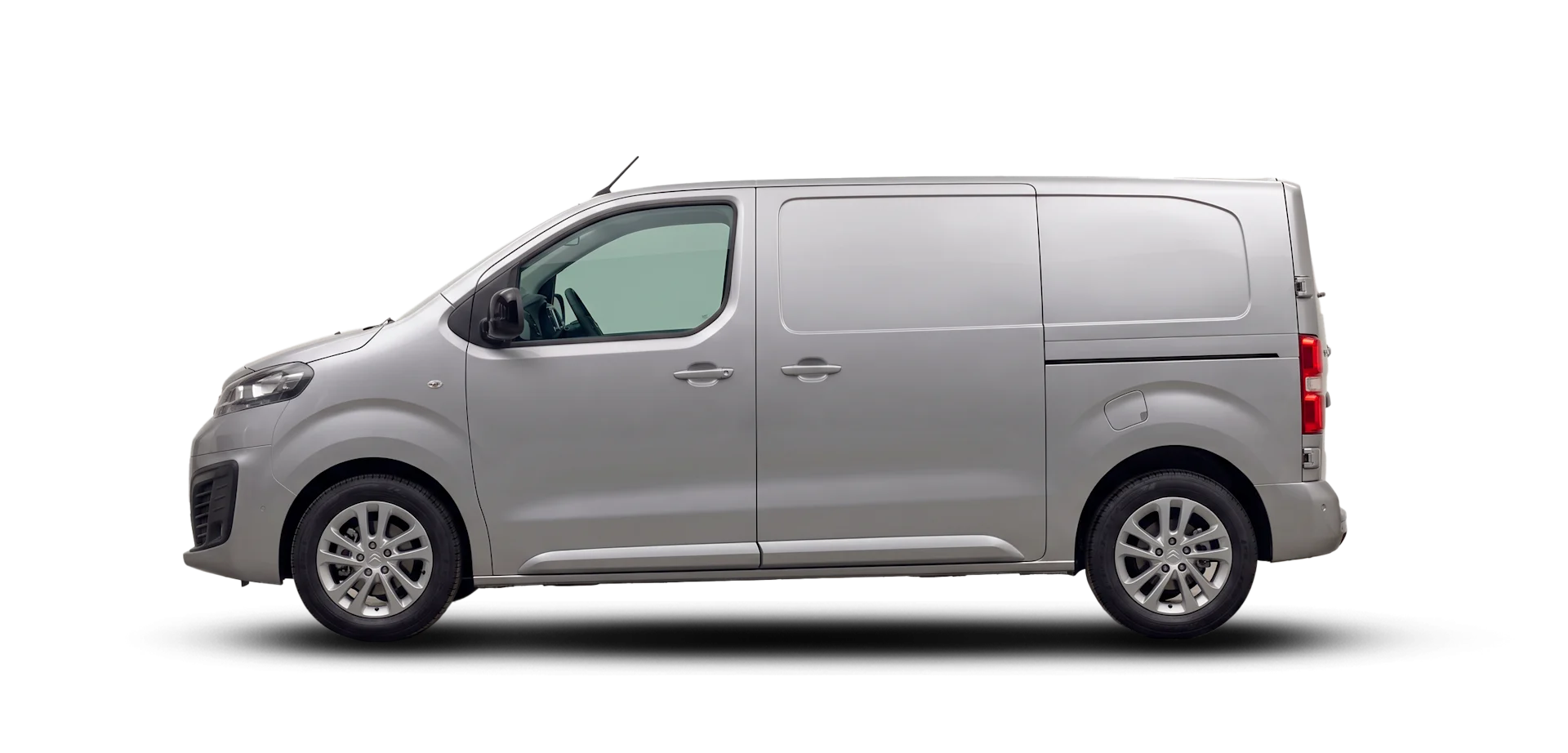
Citroen Jumpy
Agile and practical van
Overview
Citroën Jumpy in Brief
The Citroën Jumpy is a mid-size van that offers more cargo space than a compact van without the exterior dimensions of a large, high-roof panel van. It sits between the Berlingo and the Jumper in Citroën's commercial vehicle lineup. The Jumpy's strength lies especially in its practical size for work use: it can carry tools and supplies in the cargo area while still being manageable for daily commutes and errands.
In the used market, diesel models are particularly common, available with both manual and automatic transmissions. The lineup also includes the fully electric ë-Jumpy. Different body lengths allow you to choose the right fit for your hauling needs: a shorter body makes parking easier, while the long version offers more space for shelving systems and larger items in a work vehicle setup.
The Jumpy is a different model from the larger Jumper, so it's worth keeping the names straight when searching for a vehicle. You can also browse other used Citroën vehicles.
Who Is the Citroën Jumpy Right For?
The Jumpy is a good fit for buyers who need dedicated cargo space for tools or goods but also drive frequently in cities, residential areas, and tight spaces such as customer driveways. Beyond cargo volume, the right version depends on how often the vehicle is loaded and what kinds of locations it will be used in.
- Installation and service work: the cargo area can be fitted with tool shelving so equipment and supplies stay organized on the go. The sliding side door makes it easier to access items even when there's no room to open the rear doors.
- Delivery and local transport: the mid-size body works well on routes that combine urban driving, parking, and frequent loading. An automatic transmission can make a stop-and-go workday easier.
- Construction and renovation work: the long body version offers space for tools and building materials. In some third-generation vehicles, a pass-through hatch in the bulkhead allows long items to be carried partially under the front passenger seat.
- Hobbies and leisure: the cargo area works well for bicycles and other bulky equipment. If you're planning to use it for camping, it's worth checking your sleeping and storage needs against the vehicle's interior dimensions.
- Regular driving: the ë-Jumpy is an option for local service or delivery driving, provided the vehicle can be charged between shifts and the range is sufficient—including in winter.
Used Citroën Jumpy Pricing
The price of a used Jumpy is influenced primarily by model year, mileage, body length, engine, transmission, and service history. Four-wheel drive, an auxiliary heater, and pre-installed work vehicle fittings also factor into comparisons. Choosing the right equipment for your needs upfront can reduce the additional purchases required after buying the vehicle.
At the time of review in September 2026, Saka's Jumpy inventory included examples such as the following:
- 2017 BlueHDi 180 XL automatic diesel: a long-body version with 174,000 kilometers, equipped with an auxiliary heater and a tow hitch, among other features. Asking price €13,150.
- 2019 BlueHDi 120 XL manual diesel: a long-body version with 111,000 kilometers, equipped with an auxiliary heater, among other features. Asking price €16,800.
- 2020 BlueHDi 120 XL 4x4 manual diesel: a four-wheel-drive long-body version with 116,000 kilometers, equipped with an auxiliary heater and a tow hitch. Asking price €22,990.
These prices are individual listing examples, not a complete price range for used Jumpys. For current pricing and available vehicles, see the listings on this page.
Model Years and Generations
The Jumpy name has been used for vans since 1995. For used car buyers, the key milestone is the third generation, introduced in 2016, as its body, cab, and technology differ significantly from its predecessor. The key stages in the model's history are as follows:
- First generation, from 1995: the original Jumpy brought a mid-size cargo van to Citroën's lineup. For these vehicles, age, body condition, and maintenance history are already key factors in the buying decision.
- Second generation, from 2007: the body grew larger, and different lengths and roof heights were offered to meet various hauling needs. Used examples are predominantly HDi diesel versions. The roof height or cargo area dimensions of an older Jumpy should not be assumed to match those of a newer one.
- Third generation, from 2016: the new body brought a more car-like cab and multiple body lengths to the model. The diesel lineup changed over the course of production, meaning the same decade covers a variety of engine and transmission combinations.
- Fully electric ë-Jumpy, from 2020: the electric version expanded the lineup alongside the diesel models. When considering a used electric model, the battery version and charging capabilities are essential factors, even if the intended use of the cargo area is the same as with a diesel.
More information on the Jumpy's engines, dimensions, cargo area, buyer's checklist, and competitors can be found on the following tabs on this page!
Technical Specifications
Diesel Engines
The Jumpy's diesel engines vary by generation and production period. The HDi or BlueHDi badge alone does not indicate engine size, and a similar power designation may appear across different engines.
- Second-generation HDi diesels: the body style introduced in 2007 used 1.6- and 2.0-liter engines, among others. The smaller diesel suits lighter loads, while the 2.0-liter's greater torque makes driving under load easier.
- Early third generation: the diesel lineup for the model introduced in 2016 included 1.6- and 2.0-liter BlueHDi engines. Available variants included the BlueHDi 95, 115, 120, 150, and 180, for example.
- Later BlueHDi models: a 1.5-liter diesel was also added to the range. The 2.0-liter has been produced in several power outputs, such as the BlueHDi 145 and 180. The extra power is particularly useful on highways, hilly routes, and when carrying heavier loads.
All-Electric Citroën ë-Jumpy
The ë-Jumpy, introduced in 2020, features a 100 kW (136 horsepower) electric motor. The battery was placed under the floor, so the electric version retained the same cargo volume as the equivalent body style. The original lineup offered two battery options:
- 50 kWh: stated WLTP range of up to approximately 143 miles (230 kilometers).
- 75 kWh: stated WLTP range of up to approximately 205 miles (330 kilometers).
The onboard charger is available in 7.4 kW and 11 kW versions. Its output affects charging speed at locations such as a workplace charging point. The maximum DC fast charging rate is 100 kW. The manufacturer stated that the original model could charge from empty to 80 percent in approximately 30 minutes with the smaller battery and 45 minutes with the larger battery.
The WLTP figure is a reference value, so it's worth leaving a buffer for a full workday's driving, especially in winter. Speed, outside temperature, load, and heater use all affect real-world range. Later models may have different range figures than the originals, so battery size alone is not sufficient for comparing different model years.
Drivetrain Options
The Jumpy is typically front-wheel drive. However, the diesel lineup also includes four-wheel-drive versions converted by Dangel. In the early third generation, four-wheel drive was offered on the 2.0-liter BlueHDi 120 and 150 manual models. Four-wheel drive can be beneficial in snowy yards and on soft-surface job site roads.
Grip Control is not the same as four-wheel drive. It adjusts the front wheels' traction control based on the selected driving surface. The system can help with progress on slippery or loose surfaces, but it does not transfer engine power to the rear wheels.
Dimensions and Cargo Space
The third generation's original body lengths are XS, M, and XL. The rounded figures below describe standard panel van body styles from the model introduced in 2016, prior to the later front-end refresh. The table does not apply to crew cab versions or any dimensional differences resulting from Dangel conversions.
Feature | XS | M | XL |
Vehicle length, approx. | 4.60 m | 4.95 m | 5.30 m |
Cargo floor length at floor level, approx. | 2.16 m | 2.51 m | 2.86 m |
Loading length with Moduwork pass-through hatch, approx. | 3.32 m | 3.67 m | 4.02 m |
Width between wheel arches, approx. | 1.26 m | 1.26 m | 1.26 m |
Cargo volume without Moduwork extension | 4.6 m³ | 5.3 m³ | 6.1 m³ |
Volume including Moduwork extension | 5.1 m³ | 5.8 m³ | 6.6 m³ |
Moduwork allows long items to be carried partially in the cab area via the pass-through hatch. The maximum loading length in the table therefore does not mean a clear floor running the full length of the cargo area. Shelving and wall lining also reduce the usable interior space. The figures in the table are based on Citroën's model brochure.
The M and XL versions share the same wheelbase, but the XL has a longer rear overhang. The extra length adds cargo space, but it needs to be taken into account when parking and making tight turns. Vehicle height is approximately 1.90 meters in many versions, but the actual overall height depends on the body style, trim level, and roof-mounted equipment.
Payload and Towing Capacity
The third-generation diesel Jumpy's payload can reach approximately 1,400 kg, and the maximum braked trailer weight is 2,500 kg. The corresponding maximum figures for the ë-Jumpy introduced in 2020 were 1,275 kg and 1,000 kg. These are the maximum figures for the lineup, not the specifications of every individual Jumpy.
Payload refers to how much cargo the vehicle can carry. Towing capacity refers to the maximum permitted weight of a trailer including its load. A large cargo area or a powerful engine does not automatically mean the highest payload or towing capacity.
Work vehicle shelving, tools, and other equipment eat into the available payload. When choosing a specific vehicle, compare the weight of your own cargo against the vehicle's weight data. For towing use, the permitted gross train weight must also be considered, as the maximum loads for the vehicle and trailer may not always be used simultaneously.
Driving Experience and Key Features
Driving Feel and Cab Practicality
The Jumpy's mid-size body makes it easy to maneuver in yards and urban areas, but the long XL requires adequate parking space. With an enclosed cargo area, rear visibility relies on mirrors and any available camera. During a test drive, it's worth trying reversing and tight turns as well.
On a long workday, the driver's seat adjustments, armrest, and the legroom left by the bulkhead all affect comfort. If three people regularly travel in the vehicle, it's also worth checking the legroom of the center front seat in practice.
Driver Assistance and Useful Features
Feature availability varies by model year and individual vehicle. When looking at a used Jumpy, it's especially worth comparing the following:
- Rear-view camera and parking sensors: help gauge the distance between the rear of the vehicle and obstacles.
- Blind spot monitoring: helps detect vehicles moving in adjacent lanes.
- Cruise control: makes it easier to maintain a steady speed on longer drives.
- Auxiliary heater on diesel models: makes cold morning starts easier. Check whether the heater can be activated before driving.
- Sliding doors on both sides: make it easier to access cargo in various parking situations.
- Cargo area lighting, plywood lining, and shelving: affect how well the vehicle serves your specific work needs.
- Phone connectivity to the vehicle's display: makes navigation easier when moving between different job sites.
Buyer's Guide
What should you check when buying a used Citroën Jumpy?
The condition of a Jumpy should be evaluated in relation to its previous use. In delivery driving, the doors, seat, and drivetrain are used differently than on long highway runs. In a vehicle that has served on construction sites, the condition of the cargo area and chassis are especially important. Here are the things worth checking in a used Jumpy:
- Service history: review completed scheduled maintenance and any repairs, and find out what service work is coming up next.
- Engine and timing belt/chain: confirm the engine version and the timing belt/chain service dates and mileage. Also check whether there are any outstanding service campaigns or recalls.
- Sliding doors and rear doors: test opening, closing, and locking on all doors. Check the sliding door tracks, roller operation, and door seals. Power doors should also be tested using their dedicated control buttons.
- Cargo area: inspect the floor for sagging, check the walls for damage, and assess the condition of the tie-down points. Verify the mounting of any shelving and check the operation of any Moduwork pass-through hatch and seat mechanisms.
- Body and chassis: check the sills, chassis condition, lower door edges, loading thresholds, and any visible rust damage.
- Test drive: test acceleration, reversing, and gear changes both cold and warm. The vehicle should drive and brake smoothly. Note any vibrations, jerks, or unusual noises.
- Workday equipment: test the air conditioning, auxiliary heater, parking sensors, camera, and phone connectivity. Also assess whether the seat and its adjustment range suit your driving position.
What about the ë-Jumpy?
In addition to the vehicle's overall condition, the battery health and charging functionality should be checked on the electric model. Review any available battery test results and information on the remaining battery warranty terms. The vast majority of electric vehicles at Saksa have a stated SOH value. The range estimate shown on the instrument cluster changes based on recent driving and conditions, so it doesn't say much about the actual battery health.
Also test charging and inspect the condition of the charging connector and cables. Make sure to verify the onboard charger's power rating — a high-capacity charging point won't speed up charging beyond the capacity of the car's own charger. Test the cabin heating and pre-conditioning function, as these affect both comfort and usability, especially in winter.
Manual or automatic?
An automatic is a practical choice if your workday involves frequent stops, heavy traffic, and moving from one yard to another. A manual may be well suited to highway-heavy use. In addition to the transmission type, it's of course worth making sure the vehicle as a whole meets your needs.
Maintenance and running costs
It's worth evaluating the costs of a Jumpy based on your typical driving or workday. Load, driving speed, cold starts, and the number of stops all affect fuel consumption and wear. For a diesel, budget for scheduled maintenance and upcoming major service work in addition to fuel. For the electric model, costs are particularly influenced by whether the vehicle is charged primarily at your own charging point or at public fast chargers. Tires, brakes, insurance, and any modifications to work vehicle equipment should also be factored into the comparison. A vehicle that's already fully equipped can save on purchases if the shelving and heating suit your needs. For business use, also consider a replacement vehicle during service and the potential cost of work interruptions.
Diesel or electric?
The powertrain is chosen based on your typical workday, the loads you carry, and your charging options.
- Choose diesel if routes vary, days can run long, or reliable charging between shifts isn't possible. Regular towing of heavy trailers may also favor the diesel version.
- Consider the ë-Jumpy if your trips are predictable and the vehicle can be charged at home or at your company's premises. In local service and delivery driving, charging can often be scheduled during downtime between shifts. The electric model's range should be evaluated based on your longest typical winter day. If the workday requires an intermediate charge, factor in the time needed to travel to a charging location and any potential waiting time.
Which body length should you choose?
Choose the body based on what you regularly transport. Measure your longest tools, boxes, and the space required by any shelving. The cargo area's volume in liters or cubic feet alone doesn't tell you whether items will fit through the door or whether there's enough clearance between shelves.
- XS: worth considering when parking space is limited and daily cargo volume is small.
- M: suitable for transporting tools and supplies when more cargo space is needed but there's no constant need for a longer body.
- XL / L: offers extra space for long items, larger shelving setups, or recreational equipment.
If you only occasionally transport long items, the Moduwork pass-through hatch may help. However, it only works for items that fit through the hatch. If you're planning to use the vehicle for camping, it's worth sizing the bed, insulation, and storage space before choosing the vehicle.
Competitors and Comparison
Citroën's Own Alternatives
When comparing Citroën vans, the most important factors to consider are the cargo space your load requires and the vehicle's daily operating environment. The Jumpy sits between the two extremes. It offers more cargo space than the Berlingo, but is easier to fit into standard parking spaces and low-clearance areas than the larger Jumper.
- Citroën Berlingo: A smaller-class option suited for service calls, tool transport, and urban deliveries. Make sure you're looking at the van version that fits your needs, as the Berlingo is also available as a passenger car.
- Citroën Jumper: A larger van available in multiple body lengths and roof heights. It's worth including in your comparison when transporting oversized items or when you need more headroom for working inside or building out a camper van.
The Jumpy's Sister Models
The Jumpy's closest alternatives share much of its body structure and engineering. In these vehicles, individual equipment levels, service history, and price often matter more than differences between brands.
- Peugeot Expert: A close sister model to the Jumpy across multiple generations. Concurrent and equivalent body versions share largely the same cargo areas and engine options.
- Toyota Proace: A mid-size sister model whose generation, redesigned in 2016, belongs to the same model family as the third-generation Jumpy. The Proace should not be confused with the smaller Proace City.
- Opel Vivaro: The third generation, introduced in 2019, belongs to the same technical model family. Earlier Vivaros have a different architecture, so their engine and body specifications cannot be directly compared to the Jumpy.
Other Vans of Similar Size
- Ford Transit Custom: An option for those looking for a mid-size work van. Used examples come in various body lengths and include higher-roof versions as well. Pay particular attention to cab comfort, cargo area shape, and loading ease.
- Volkswagen Transporter: An option for work, hobby, and recreational use, among others. Used examples are also available with 4Motion all-wheel drive and DSG automatic transmissions, making it worth including in any comparison of all-wheel-drive work vans.
Both model names span multiple generations. Test drive vehicles from the same age group whenever possible and compare them from the perspective of your own workday: driving position, storage solutions, noise levels, and cargo handling are differences you'll feel every day.
Summary
The Jumpy is a good fit for buyers who need mid-size van cargo capacity and want to choose from different body lengths, diesel, or electric powertrains. When compared to the Expert, Proace, and newer Vivaro, the condition, equipment level, and price of the individual vehicle often prove decisive. Test driving the Transit Custom and Transporter, on the other hand, helps you determine which cab and cargo area setup best suits your needs.
Start by identifying the cargo space and payload capacity you need, then choose your powertrain and features. That way, you won't pay for unnecessary size or end up with a vehicle that needs immediate modifications to suit your work requirements.
Frequently Asked Questions
Is the Citroën Jumpy a good van?
The Jumpy is a great option when you need more cargo space than a compact van offers, while still keeping reasonable exterior dimensions. Different body lengths and powertrains cater to a variety of needs.
What are the common issues with the Citroën Jumpy?
Problem areas depend on the engine and model year. Some 1.5 BlueHDi engines have been found to have premature camshaft chain wear. For these, it's worth checking for any recall campaigns and repairs that have been carried out. This issue does not affect all Jumpys.
Does the Citroën Jumpy have a timing belt or a timing chain?
The Jumpy diesel lineup uses a timing belt. In addition, the 1.5 BlueHDi engine, for example, also has a chain between the camshafts.
When does the timing belt on a Citroën Jumpy need to be replaced?
The replacement interval depends on the engine version and the vehicle's service schedule. Verify the current mileage and time limit using the VIN. There is no single universal replacement interval that applies to all Jumpys.
Is the Citroën Jumpy the same vehicle as the Peugeot Expert?
They are closely related sister models that share a great deal of technology and body structure. However, there are differences in trim levels and model variants. Compare vehicles of the same generation and body length.
Is the Citroën Jumpy available with an automatic transmission?
Yes. Automatic versions of the diesel Jumpy are available, such as the third-generation EAT6 and EAT8 models.
Is the Citroën Jumpy available with four-wheel drive?
Most Jumpys are front-wheel drive, but the diesel lineup also includes Dangel four-wheel drive versions. Grip Control traction management does not mean four-wheel drive.
How much can the Citroën Jumpy tow?
Some third-generation diesel versions have a braked towing capacity of up to 2,500 kilograms. This refers to the trailer's mass including its load. The permitted towing capacity for your specific vehicle can be found in the registration documents.
What is the range of the electric ë-Jumpy?
The model introduced in 2020 had a WLTP range of up to approximately 230 miles with the 50 kWh battery and 330 miles with the 75 kWh battery. Figures for later versions may differ. Cold weather, driving speed, and load all affect the real-world range.
What is the difference between the Jumpy and the Jumper?
The Jumpy is a mid-size van. The Jumper is a larger model, available in significantly taller and more spacious body configurations. The Jumpy is often better suited to tight spaces, while the Jumper is designed for larger loads.
Is the Citroën Jumpy suitable as a camper van?
Yes, especially the long body version can be fitted with a bed and storage to make a capable camper van. In a standard low-roof Jumpy, an adult cannot stand upright. When planning the interior layout, the vehicle's payload capacity must also be taken into account.
Easy car deals at Saka!
Saka is Finland's largest used-car dealer, and our operations are built on strict quality control. We select only the best examples among used cars and make sure every car we sell lives up to our promises.
Every used car priced over €10,000 that comes up for sale at Saka undergoes an independent third-party condition inspection, and the key findings are compiled for the customer in the Rehti certificate – the new standard for used-car condition inspections.
Why buy a car from Saka?
- Thorough condition inspection and the Rehti certificate: Our used cars priced over €10,000 undergo an independent third-party condition inspection, and the batteries of electric cars and plug-in hybrids are tested with the Aviloo battery test. The key findings of the inspection are compiled for the customer in the Rehti certificate. Read more about the Rehti certificate, the condition inspection and the battery test.
- Flexible car financing: We offer ready-negotiated financing, letting you pay for your car easily in even monthly instalments – even without a down payment if needed.
- Trading in your car: Sell us your old car! We buy cars under 10 years old with under 225,000 km on the clock. When you buy a car from us, we'll take your old car in trade.
- Home delivery: We deliver the car of your dreams to a Saka showroom or straight to your front door anywhere in Finland. Read more about home delivery.
On our site you'll also find plenty of information on different car models and fuel types. On our media page you'll find, besides our sweepstakes, things like:
- Guides to buying an electric car, a hybrid car and a used car
- Test-drive videos, where experienced car journalist Anniina Pohjonen test-drives Saka's most popular cars
- Tip videos, where our car salespeople answer the most common questions about choosing a car
- Stylish vibe videos of the most popular car models
Interested in a Jumpy?
Get in touch!Contact one of our experts and find the perfect Jumpy for you.