
Found 6 cars




Showing 6 / 6 cars
All cars shown
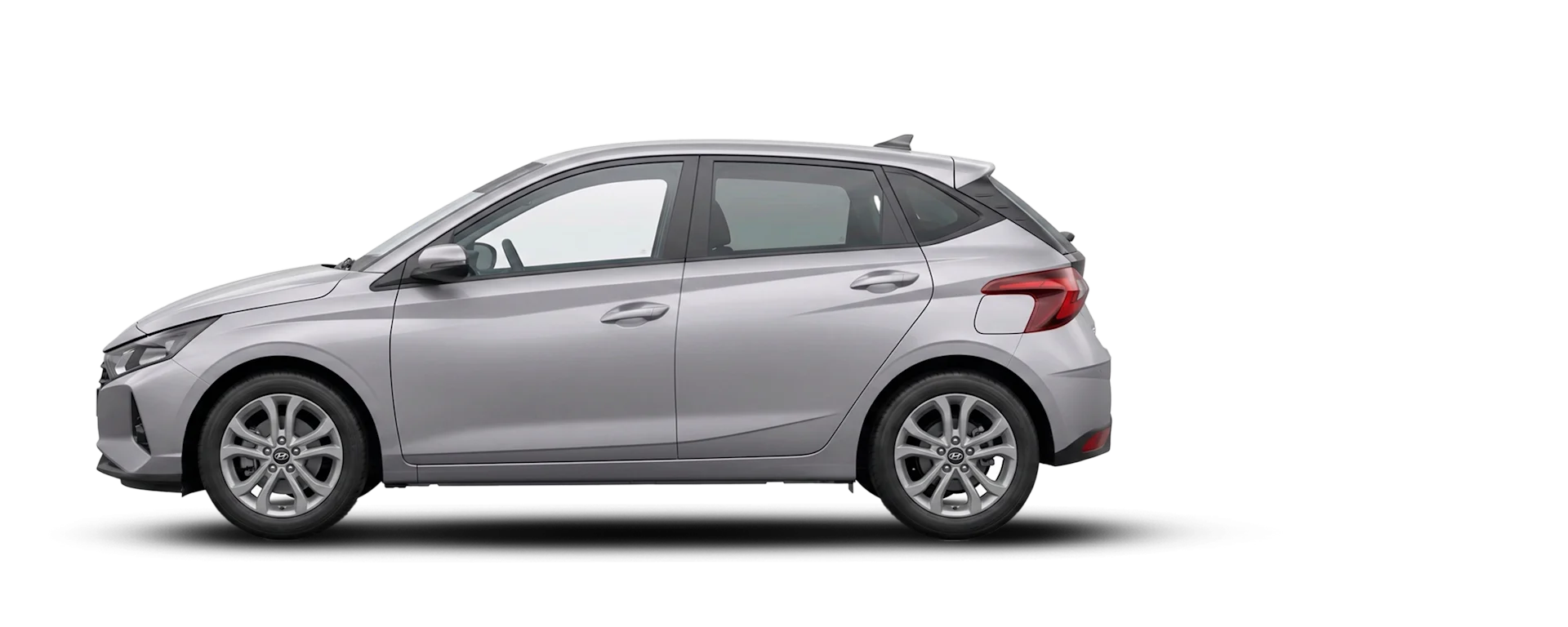
Hyundai i20
Agile city car without compromises
Overview
Hyundai i20 in Brief
The Hyundai i20 is a subcompact city car from the South Korean manufacturer that has been competing against Europe's most popular small cars — the Volkswagen Polo, Toyota Yaris, and Ford Fiesta — since 2008. Over the years, it has been one of Hyundai's best-selling models in Finland as well.
The i20 combines clean and modern styling, efficient small engines, and comprehensive safety features at a competitive price for its class. The car doesn't aim for maximum space or performance; instead, it's designed primarily to be easy and affordable for everyday use in the city and surrounding areas.
Who Is the Hyundai i20 For?
The Hyundai i20 is a good fit for buyers who:
- need an agile, easy-to-park car for city driving
- want to keep fuel and maintenance costs reasonable
- value comprehensive safety features even in a more affordable price range
- are looking for a second household car or a suitable first car
- don't need a large cargo area or towing capacity for daily use
Model Years and Generations
The first generation of the Hyundai i20 was unveiled at the Paris Motor Show in October 2008, and it went on sale in Europe in the spring of 2009. The model was initially available as a five-door, with a three-door version following in April 2009. Engine options included 1.2- and 1.4-liter gasoline engines as well as a 1.4-liter CRDi diesel engine.
The second generation was unveiled in October 2014 and arrived on the Finnish market in the spring of 2015. The model was updated in 2018. The 1.4 CRDi diesel engine (66 kW / 90 hp) from this generation is particularly well known as a reliable diesel option in a small car.
The third generation was unveiled in 2020 and was the first European Hyundai model to feature the new "Sensuous Sportiness" design language. The lineup was further updated in 2023. The diesel option has been dropped entirely from the third generation — the only powertrain available is gasoline, with a mild hybrid system in some versions.
Hyundai i20 Variants
- Hyundai i20: The base model, available with either a 1.2-liter MPi engine or a turbocharged 1.0 T-GDI engine.
- Hyundai i20 N Line: A sportier exterior and interior with the same 1.0 T-GDI engine — not more powerful, but a sharpened version in terms of style and driving feel.
- Hyundai i20 N: The lineup's dedicated performance model, featuring a significantly more powerful 1.6-liter turbocharged engine. Considerably rarer and more expensive than the standard i20 on the used market.
- In older (1st–2nd) generations, a 1.4 CRDi diesel engine was also available, which is of particular interest to used car buyers who drive a lot.
Technical Specifications
Engines and Powertrains
The current (third-generation) Hyundai i20's engine lineup consists of three gasoline options:
- 1.2 MPi, 84 hp: A four-cylinder port fuel-injected base engine, always paired with a 5-speed manual transmission. Simple and affordable to maintain.
- 1.0 T-GDI, 100 hp: A turbocharged three-cylinder engine, available with either a 6-speed manual or a 7-speed DCT dual-clutch automatic transmission.
- 1.0 T-GDI, 120 hp, 48V mild hybrid: The most powerful and fuel-efficient gasoline version in the lineup, always paired with the 7-speed DCT automatic. The mild hybrid system recovers braking energy and reduces fuel consumption by approximately 3–4%. The manufacturer's stated WLTP fuel consumption is 5.2 l/100 km, CO2 emissions are 118 g/km, and the 0–62 mph acceleration time is 10.1 seconds.
Older, second-generation (2014–2020) used i20 models also feature a 1.4 CRDi diesel engine (66 kW / 90 hp), which has a reputation among small diesel cars for being exceptionally durable and trouble-free.
Drivetrain and Transmission Options
The Hyundai i20 is always front-wheel drive — an all-wheel drive version has never been offered. Depending on the engine, transmission options include either a manual gearbox (5- or 6-speed) or a 7-speed DCT dual-clutch automatic. No plug-in hybrid or fully electric version of the i20 has been produced; electrification is limited to the mild hybrid system available in the most powerful gasoline variant.
Dimensions, Cargo Space, and Towing Capacity
The third-generation Hyundai i20 measures 4,065 mm in length, 1,775 mm in width (excluding mirrors), and 1,450 mm in height. The wheelbase is 2,580 mm and ground clearance is 170 mm. Cargo capacity is 352 liters, expanding to 1,165 liters with the rear seats folded. The fuel tank holds 37 liters.
True to its small-car segment, this is a compact city car — the cargo space is well suited for everyday errands and a modest amount of luggage, but the car is not designed for towing heavy trailers.
Driving Experience and Top Features
Driving Feel, Driver Assistance, and Safety
The Hyundai i20 is known for its agile and light handling, making it particularly enjoyable for city driving and tight parking situations. The turbocharged 1.0 T-GDI engine has been praised for delivering an impressive amount of torque from such a small displacement for everyday driving.
In terms of safety, the current i20 received four out of five stars in the Euro NCAP crash test (2021). The test was conducted on the closely related Hyundai Bayon, whose safety equipment mirrors that of the i20 — Euro NCAP has confirmed that the two vehicles are essentially identical in terms of safety.
Hyundai's SmartSense safety package includes features such as lane keeping assist, lane departure warning, autonomous emergency braking with pedestrian and cyclist detection, driver attention warning, and high beam assist. Some features are standard, while others are available as part of the Safety Pack add-on package for the Comfort and Style trim levels — so it's worth checking the specifications of any individual vehicle.
Top Features
- Bluelink connectivity services
- Touchscreen infotainment system
- N Line models feature sporty details: red stitching on the seats and steering wheel, metal-finish pedals, a chrome dual exhaust tip, and a triangular rear fog light
Buyer's Guide
What should you check when buying a used Hyundai i20?
- service history and adherence to the service interval (1 year / 15,000 km)
- DCT automatic transmission performance during a test drive — jerking around 60,000–80,000 kilometers has been reported particularly in 2014–2016 automatic models
- air conditioning system cooling performance — compressor and refrigerant leak issues have occurred in 2012–2015 models
- smoothness of cold starts (battery and ignition system condition)
- general condition of the body, tires, and brakes
Maintenance and running costs
The Hyundai i20's service interval, per the manufacturer's guidelines, is one year or 15,000 kilometers, whichever comes first. As a small car equipped with straightforward technology, the i20's upkeep is modest for its class, and in particular the base 1.2 MPi engine and the second-generation CRDi diesel are known as affordable, low-maintenance options.
Gasoline, hybrid, or older-generation diesel?
The base 1.2 MPi engine suits a buyer who drives infrequently and values simple, affordable-to-maintain technology. The 1.0 T-GDI engine delivers more performance at a similar fuel consumption level, and the 48V mild hybrid version is the most fuel-efficient and lowest-emission option among newer used models.
For high-mileage drivers and those who frequently take long trips, the second-generation 1.4 CRDi diesel can be an interesting used option: it has proven exceptionally reliable and fuel-efficient, although diesel is no longer available in the current third generation.
Standard i20 or N Line?
The standard i20 is a practical and understated choice that suits most use cases. The N Line adds a sportier exterior and interior along with a slightly sharper driving feel, but the engine remains the same — so it's more of a style choice than a performance upgrade. Those looking for a truly sporty driving experience should instead set their sights on the rarer and more powerful i20 N.
Which Hyundai i20 version should you choose?
For most buyers, the i20 with the 1.0 T-GDI engine — either without or with the mild hybrid system — is the most sensible starting point: it combines adequate performance with good fuel efficiency. For those who drive infrequently and are looking for the most affordable option, the 1.2 MPi base model is perfectly sufficient. For high-mileage drivers, the second-generation CRDi diesel is worth considering as a used purchase, and for those wanting a more stylish look, the N Line offers the same mechanicals in a sportier package.
Competitors and Comparison
Comparison Between Hyundai Models
- Hyundai i10: A smaller and more affordable city car than the i20, particularly well-suited for dense urban driving.
- Hyundai Bayon: A raised crossover version based on the i20's platform — sharing the same engines and safety features, but with a higher driving position and slightly more space.
- Hyundai i30: A noticeably larger compact model than the i20, a good fit if the i20's space starts to feel insufficient.
Comparison With Competitors
- Toyota Yaris: A strong competitor, especially with its hybrid option and well-known reliability; the i20 counters by often offering more interior space.
- Volkswagen Polo: A more refined-feeling interior and driving experience, but the i20 is typically more affordable used at the same trim level.
- Ford Fiesta: A sportier driving alternative; the i20 offers more comprehensive standard safety features in lower trim levels.
- Skoda Fabia: A practical and spacious option in the same size class; the i20 stands out with its more youthful styling.
- Renault Clio: A stylish and well-equipped competitor; the choice between these two often comes down to personal taste and individual price-to-features ratio.
Summary
The Hyundai i20 is a well-rounded choice for buyers looking for an affordable, agile, and well-equipped subcompact car without major compromises on safety. It's not the roomiest or most powerful in its class, but the combination of comprehensive safety features, low running costs, and a wide range of engine options makes it a compelling option for city driving and everyday use.
Frequently Asked Questions – Hyundai i20
Is the Hyundai i20 a good used car?
Yes, especially when it has been well maintained. The i20 is straightforward in terms of technology and inexpensive to run in the small car segment. However, it is always worth checking the service history and, in particular, the condition of the automatic transmission before purchasing.
How much fuel does the Hyundai i20 consume?
Fuel consumption depends on the engine. The most powerful and most fuel-efficient model, the 1.0 T-GDI 120 hp mild hybrid, has a manufacturer-stated WLTP figure of approximately 5.2 liters per 100 kilometers. Consumption varies for other engines depending on the model and model year, so it is worth checking the exact figure in the individual vehicle's specifications.
What are the typical problems with the Hyundai i20?
The DCT automatic transmissions in second-generation models (2014–2020) have been reported to jerk around the 60,000–80,000 kilometer mark, and air conditioning compressor issues have been observed in 2012–2015 models. Otherwise, the i20 is known as a reasonably reliable small car, provided that servicing has been carried out on schedule.
Is the Hyundai i20 a safe choice?
The current i20 has received four out of five stars in Euro NCAP crash testing (tested on the closely related Bayon model, which shares the same safety equipment). Standard equipment includes the comprehensive SmartSense safety package, which features automatic emergency braking and lane keeping assist, among other systems.
What is the difference between the i20 and the i20 N Line?
The N Line brings a sportier exterior and interior — such as red stitching and metal pedals — along with slightly tuned suspension and throttle response, but the engine is the same as in the standard 1.0 T-GDI model. It is more about style than added performance.
Is a diesel engine available for the used Hyundai i20?
Yes, but only in older generations. The second-generation (2014–2020) 1.4 CRDi diesel is well regarded for its reliability. The current third generation (2020–) is no longer available with a diesel option.
Easy car deals at Saka!
Saka is Finland's largest used-car dealer, and our operations are built on strict quality control. We select only the best examples among used cars and make sure every car we sell lives up to our promises.
Every used car priced over €10,000 that comes up for sale at Saka undergoes an independent third-party condition inspection, and the key findings are compiled for the customer in the Rehti certificate – the new standard for used-car condition inspections.
Why buy a car from Saka?
- Thorough condition inspection and the Rehti certificate: Our used cars priced over €10,000 undergo an independent third-party condition inspection, and the batteries of electric cars and plug-in hybrids are tested with the Aviloo battery test. The key findings of the inspection are compiled for the customer in the Rehti certificate. Read more about the Rehti certificate, the condition inspection and the battery test.
- Flexible car financing: We offer ready-negotiated financing, letting you pay for your car easily in even monthly instalments – even without a down payment if needed.
- Trading in your car: Sell us your old car! We buy cars under 10 years old with under 225,000 km on the clock. When you buy a car from us, we'll take your old car in trade.
- Home delivery: We deliver the car of your dreams to a Saka showroom or straight to your front door anywhere in Finland. Read more about home delivery.
On our site you'll also find plenty of information on different car models and fuel types. On our media page you'll find, besides our sweepstakes, things like:
- Guides to buying an electric car, a hybrid car and a used car
- Test-drive videos, where experienced car journalist Anniina Pohjonen test-drives Saka's most popular cars
- Tip videos, where our car salespeople answer the most common questions about choosing a car
- Stylish vibe videos of the most popular car models
Interested in a i20?
Get in touch!Contact one of our experts and find the perfect i20 for you.