
Found 9 cars







Showing 9 / 9 cars
All cars shown
Toyota Hilux
The legend of open flatbeds since 1968
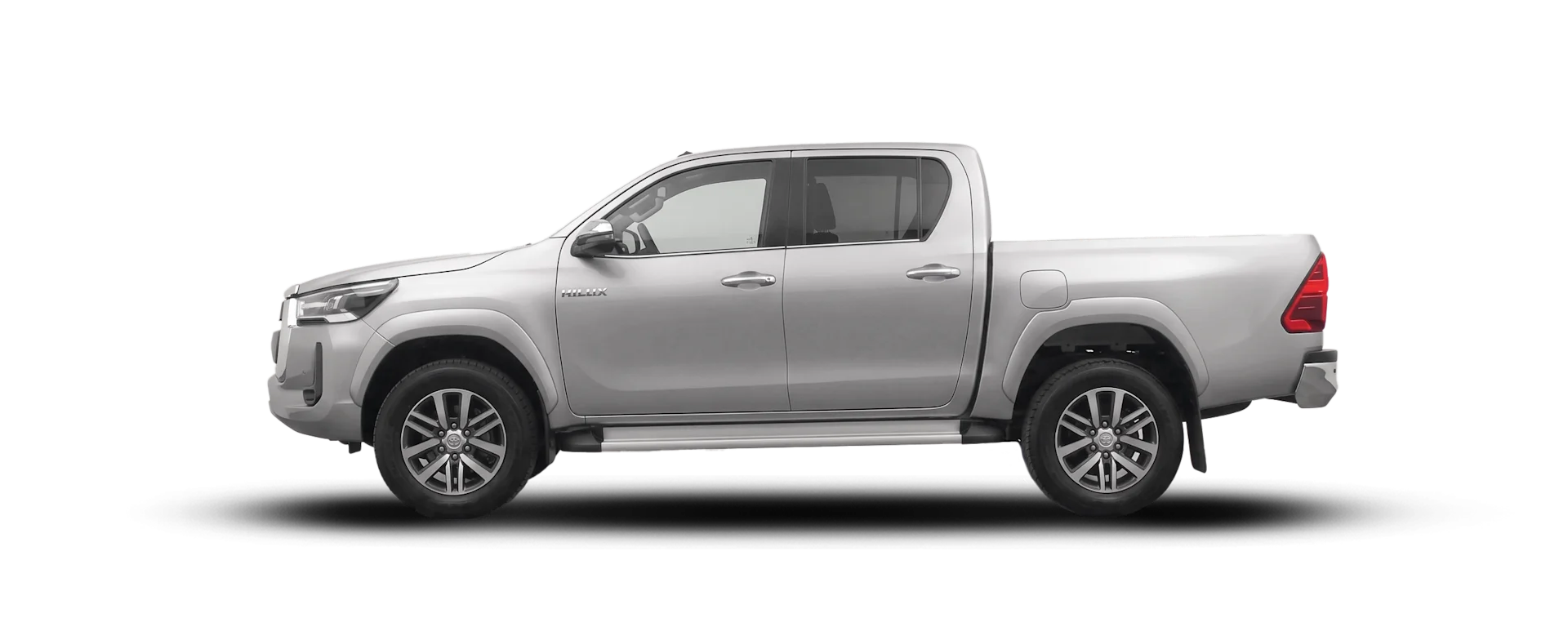
Overview
Toyota Hilux in Brief
The Toyota Hilux is a pickup truck that has been manufactured since 1968, designed for hauling cargo, towing, and demanding driving conditions. In Finland, the used car market is dominated by four-wheel-drive diesel models. The most common cab configurations are the Extra Cab, which features a longer bed, and the Double Cab, which offers a more spacious second row of seating.
The Hilux is well suited for work, agriculture, hunting, and other activities that require a separate cargo area and the ability to handle rough terrain. When choosing the right vehicle, key factors beyond the model year include cab type, bed length, engine, transmission, payload capacity, and the towing capacity listed in the vehicle registration.
Also check out other Toyota used cars and Saka's four-wheel-drive vehicles.
Who Is the Toyota Hilux For?
The Hilux is a well-justified choice when the capabilities of a regular passenger car or van fall short due to cargo, towing, or driving conditions. The model is particularly suited for the following uses:
- Job sites and agriculture: the open bed allows you to transport tools, machinery, and dirty loads separately from the cabin.
- Towing a boat, horse trailer, or other trailer: many Hilux models have a braked towing capacity of 3,500 kg, but the permitted capacity should always be verified from the individual vehicle's registration documents.
- Hunting and outdoor activities: four-wheel drive, a low-range transfer case, and ground clearance make it easier to navigate snow and rough roads.
- Transporting long items: the Extra Cab has a longer bed than the Double Cab, as less space is allocated to the passenger compartment.
- Combining work and leisure: the Double Cab's second row of seating is better suited for regular passenger transport.
Used Toyota Hilux Pricing
The price of a Hilux is influenced primarily by model year, mileage, engine, transmission, cab type, and overall condition. Features such as a bed cover, tow hitch, auxiliary heater, and VAT deductibility can also be valuable to buyers. Choosing the right equipment for your needs reduces the need for additional work after purchase.
At the time of review in September 2026, Saka's inventory included, for example:
- a 2013 Double Cab 3.0 D-4D automatic with 373,000 kilometers driven, priced at €18,990
- a 2020 Extra Cab 2.4 D-4D manual with 242,000 kilometers driven, priced at €27,890
- a 2022 Extra Cab 2.8 D-4D Invincible automatic with 122,000 kilometers driven, priced at €45,890.
These prices are individual listing examples. Current vehicles for sale and their prices are shown in the listings on this page.
Model Years and Generations
The Hilux has been produced since 1968 across nine generations. The most relevant for Finland's current used car market are the seventh and eighth generations. The ninth generation, introduced in 2026, will not appear in the used car market until later.
- Seventh generation, 2005 to 2015: the most common engines in Finland are the 2.5- and 3.0-liter D-4D diesels. The model was updated multiple times throughout its lifecycle, so appearance, power output, features, and emissions technology vary by model year.
- Eighth generation, from 2016: the Hilux was completely redesigned. The European lineup launched with a 2.4-liter D-4D diesel producing 150 hp and 400 Nm of torque.
- 2020 facelift: the front-end styling, suspension tuning, and features were updated. The lineup gained a 2.8-liter diesel with 204 horsepower, producing 500 Nm of torque with the automatic transmission.
- Later versions in the 2020s: the lineup expanded to include, among others, the more sportily styled GR SPORT and a 48-volt mild hybrid based on the 2.8-liter diesel. Availability in Finland depends on model year and trim level.
- Ninth generation, 2026: the new European Hilux was introduced in Double Cab body style with a fully electric powertrain as well as a 2.8 Diesel 48V version. It is a different model generation than the vehicles currently available in Saka's used car inventory.
Technical Specifications
Engines and Powertrains
The used Hilux market in Finland consists almost entirely of diesel vehicles. It helps to understand the engine lineup by generation, as displacement, power output, and emissions technology changed with each model update.
- 2.5 D-4D: A four-cylinder diesel from the seventh generation, available in several power outputs. The more common version in Finland is the later 144-horsepower variant.
- 3.0 D-4D: A 171-horsepower diesel from the seventh generation. The larger engine offers more performance than the 2.5 D-4D, especially when loaded or towing a trailer.
- 2.4 D-4D: A 150-horsepower diesel from the eighth generation with a maximum torque of 400 Nm. It is common in both manual and automatic used Hiluxes.
- 2.8 D-4D: A 204-horsepower diesel introduced to the European lineup with the 2020 refresh. In automatic transmission versions, maximum torque reaches 500 Nm, making it a better choice than the 2.4 D-4D for buyers who frequently tow heavy trailers.
- 2.8 Diesel 48V: A mild hybrid that uses an electrical system to assist the diesel engine. It cannot be charged from an external power source and is not capable of driving long distances on electricity alone.
Manual and Automatic Transmissions
Seventh-generation Hiluxes come with five- or six-speed manual transmissions and five-speed automatics, depending on the engine and model year. Eighth-generation 2.4 and 2.8 diesel models use either a six-speed manual or a six-speed automatic.
A manual transmission may suit a work vehicle or a buyer who values straightforward control. An automatic makes driving easier in traffic, off-road, and when towing. During a test drive, gear changes should feel consistent, and the service history should be checked for any maintenance performed specifically on the transmission.
Four-Wheel Drive and Off-Road Capabilities
Hiluxes sold in Finland generally feature a selectable four-wheel drive system with a low-range transfer case. In standard 2H mode, the vehicle is rear-wheel drive. 4H engages four-wheel drive for slippery or loose surfaces, while 4L provides lower gear ratios for slow off-road driving. The correct procedure for engaging four-wheel drive depends on the model year and should be confirmed in the owner's manual.
The Hilux uses a part-time four-wheel drive system, meaning there is no center differential as found in full-time four-wheel drive systems. For this reason, 4H or 4L should not be used on dry pavement with good traction. A rear differential lock helps in situations where one rear wheel loses traction, though its availability depends on the trim level.
Eighth-generation four-wheel drive models may feature A-TRC traction control, which can brake a spinning wheel and direct power to wheels with better grip. Downhill Assist Control, Hill Start Assist, and various other off-road support systems vary by model year, transmission, and trim level.
Cab Configurations and Bed
The Hilux cab configuration determines whether the truck is oriented more toward cargo hauling or passenger capacity:
- Single Cab: One row of seats and the longest bed. Significantly less common than the Extra Cab and Double Cab in the Finnish used market.
- Extra Cab: Additional space behind the front seats with rear seating that varies by model. The longer bed makes it a practical choice as a two-person work vehicle.
- Double Cab: Four side doors and a more usable second row of seats. It is well suited for regular passenger transport, but the bed is shorter than on the Extra Cab.
Dimensions, Payload, and Towing Capacity
The dimensions below apply to eighth-generation four-wheel drive models updated in 2020. Exact exterior dimensions, bed dimensions, and weights vary by body style, trim level, and optional equipment.
Specification | Extra Cab | Double Cab |
Length | 5,325 mm | 5,325 mm |
Width (excluding mirrors) | 1,855 mm | 1,855 mm |
Wheelbase | 3,085 mm | 3,085 mm |
Bed length | 1,810 mm | 1,525 mm |
Maximum bed width | 1,540 mm | 1,540 mm |
Bed depth | 480 mm | 480 mm |
The Hilux's payload capacity is determined by the difference between the individual vehicle's curb weight and its gross vehicle weight rating. A tonneau cover, trailer hitch, other accessories, passengers, and cargo all reduce the available payload. The exact figure should be verified on the vehicle registration certificate.
The maximum permissible braked trailer weight for many eighth-generation four-wheel drive Hiluxes is 3,500 kg. This refers to the trailer's allowable mass including its load. The vehicle's maximum combined weight, tongue weight, driver's license class, and the vehicle's own load may also limit how heavy a trailer can practically be towed.
Driving Experience and Top Features
On-Road Feel and Loaded Performance
The Hilux features a body-on-frame construction, a solid rear axle, and leaf springs designed for cargo hauling and demanding conditions. With an empty bed, the rear end may respond to road imperfections more sharply than a passenger car. A load changes the vehicle's braking distance, steering feel, and cornering behavior, so in addition to staying within rated weight limits, cargo must be properly positioned and secured.
The length of over five meters and the large turning radius are noticeable when parking. A backup camera and parking sensors make a significant difference. All-terrain tires can increase noise and fuel consumption during regular road driving, so the right tires should be chosen based on actual driving conditions.
Top Features
When comparing used Hiluxes, useful features to look for include:
- Fuel-operated auxiliary heater
- Heated seats and, on newer models, a heated steering wheel
- Backup camera and parking sensors
- Adaptive cruise control on newer versions
- Trailer hitch
- Locking tonneau cover or hardtop
- Bed liner and tie-down points
- Rear differential lock
- LED headlights
- Apple CarPlay and Android Auto connectivity on newer models
Buyer's Guide
Maintenance and Running Costs
The running costs of the Hilux are generally higher than those of a typical passenger car, but comparable to other four-wheel-drive pickup trucks of similar size. The high curb weight, commercial-grade tire sizes, four-wheel drive, and potential heavy use all contribute to wear on tires, brakes, and the chassis. Diesel costs include not only fuel but also motor vehicle tax and maintenance of emissions systems.
Alongside the purchase price, it is worth looking into upcoming scheduled services, tire condition, and any aftermarket modifications. Towing, off-road driving, and dusty conditions may fall under the demanding use category in the service schedule. The correct service items for the engine, transmission, and four-wheel-drive system should be verified based on the vehicle's model year and identification details.
What Should You Check When Buying a Used Toyota Hilux?
Checklist
- Service history: review completed scheduled services and any repairs, and identify what maintenance work is coming up next.
- Frame and chassis: inspect for rust, dents, bent guards, and any leaks. A lift inspection will reveal the condition of the underside better than a test drive alone.
- Bed: check the floor, sides, tie-down points, and the operation of any bed cover or tonneau. Deep dents or damaged mounting points may indicate heavy use.
- Four-wheel drive: test the 4H and 4L modes as well as any rear differential lock on a suitable surface, following the owner's manual. No system fault warnings should remain on the dashboard.
- Transmission and clutch: test cold and warm starts and gear changes. On a manual, assess clutch feel; on an automatic, check for smooth and consistent shifting.
- Tires: check size, load rating, and even wear. Tires on the same axle should be matching.
- Tow hitch and electrical connector: if the vehicle will be used for towing, verify the condition of the hitch, socket, and trailer lights.
- Modifications: confirm that any lift kits, winches, auxiliary lights, tire changes, and bed structures are properly fitted and that any required modification inspection has been completed.
Extra Cab or Double Cab?
- Choose the Extra Cab if you drive mainly alone or with one passenger and need a longer bed for tools or long cargo. The rear storage area does not offer a true second row of seating like the Double Cab.
- Choose the Double Cab if you regularly carry multiple passengers or use the Hilux for family leisure trips as well. The trade-off is a shorter bed.
2.5, 3.0, 2.4, or 2.8 Diesel?
- 2.5 D-4D offers a wide range of older, more affordable options. Suitability comes down to condition, service history, and the performance level required.
- 3.0 D-4D is the more powerful engine option in the seventh generation if the 2.5 D-4D does not provide enough performance for load carrying and towing.
- 2.4 D-4D is the common base diesel in the eighth generation. It suits work and general use when the extra power of the 2.8 D-4D is not needed.
- 2.8 D-4D is the most natural choice for a buyer who frequently tows heavy trailers or wants more effortless performance under load.
Manual or Automatic?
A manual may be more affordable and suit a buyer who values direct control over gear changes. An automatic reduces driver workload in traffic, slow off-road driving, and towing situations. The decision is best made based on how you use the vehicle and the condition and service history of the individual car, rather than on transmission type alone.
Competitors and Comparison
Toyota's Own Alternatives
- Toyota Land Cruiser: a better fit if you need four-wheel drive and strong towing capacity but not a pickup bed. The enclosed cabin and cargo area serve personal and travel use better than the Hilux.
- Toyota Proace: choose an enclosed van if load protection from the elements, a lower loading height, and cargo volume are more important to you than ground clearance and an open bed.
Comparison with Other Pickup Trucks
- Ford Ranger: offers a wide range of engine and trim options, with plenty of used choices available. The Ranger is worth considering especially if car-like comfort features or more powerful special editions are of interest.
- Volkswagen Amarok: emphasizes a spacious cab, powerful engines, and on-road comfort. The first-generation V6 diesels and the new Amarok based on the Ranger are clearly distinct from one another.
- Isuzu D-Max: a work-focused competitor worth comparing to the Hilux on the basis of price, payload, towing capacity, and features.
- Mitsubishi L200: often a (slightly) more compact alternative, whose four-wheel drive systems and used prices may suit different use cases and budgets.
- Nissan Navara: a used option for buyers looking for a Double Cab, strong towing capacity, and a more car-like rear suspension. The European market supply leans toward older models.
Summary
The Hilux's strengths include a long model history, a design clearly built for work and tough conditions, and diesel versions that are widely recognized in Finland. The Ranger offers a broader range of performance and comfort orientations, the Amarok delivers strong on-road characteristics, and the D-Max is a work-focused alternative. The L200 may be a better fit in terms of size or price.
The best used pickup truck is found by comparing vehicles of the same age equipped with the same cab type. When making a purchase decision, factors such as the condition of the frame and bed, service history, payload capacity, towing capacity, and whether your load fits the bed appropriately may matter more than raw power.
Toyota Hilux – Frequently Asked Questions
Is the Toyota Hilux a van or a passenger car?
Hilux vehicles sold in the Finnish market are typically registered as N1-class light commercial vehicles, but the vehicle category and number of seats should be verified from the individual vehicle's registration details. Used Double Cab models with two or five seats may also be available.
How much can the Toyota Hilux tow?
Many eighth-generation four-wheel-drive Hilux models have a maximum permitted braked trailer mass of 3,500 kg. Older models and different variants may have a lower figure. Also check the maximum combination weight in the vehicle registration certificate.
What is the difference between the Extra Cab and the Double Cab?
The Extra Cab has a longer bed and a smaller space behind the front seats. The Double Cab has four doors and a more practical second row of seats, but a shorter bed.
Is the Toyota Hilux always four-wheel drive?
Not in all markets, but the used Hilux inventory available in Finland is heavily weighted toward four-wheel-drive models.
Can you drive a Hilux in four-wheel drive on asphalt?
The Hilux's part-time four-wheel-drive modes 4H and 4L should not be used on dry, high-traction asphalt. In normal road driving, 2H mode is used. Specific speed limits and usage instructions can be found in the owner's manual for the relevant model year.
Does the Toyota Hilux have a timing belt or a timing chain?
The Hilux comes with both. The seventh-generation 2.5 D-4D and 3.0 D-4D diesel engines use a timing belt, while the eighth-generation 2.4 D-4D and 2.8 D-4D diesel engines have a timing chain.
Which Hilux is better, the 2.4 or the 2.8 diesel?
The 2.4 D-4D is sufficient for many work and general-use drivers, while the 2.8 D-4D offers more power and torque for heavy towing.
What should you check when buying a used Toyota Hilux?
Check the service history, the condition of the frame and undercarriage, the bed, tires, tow hitch, and the operation of the four-wheel-drive modes. Where possible, also find out how the vehicle was previously used and whether any suspension, tire, or bed modifications have been carried out properly.
Easy car deals at Saka!
Saka is Finland's largest used-car dealer, and our operations are built on strict quality control. We select only the best examples among used cars and make sure every car we sell lives up to our promises.
Every used car priced over €10,000 that comes up for sale at Saka undergoes an independent third-party condition inspection, and the key findings are compiled for the customer in the Rehti certificate – the new standard for used-car condition inspections.
Why buy a car from Saka?
- Thorough condition inspection and the Rehti certificate: Our used cars priced over €10,000 undergo an independent third-party condition inspection, and the batteries of electric cars and plug-in hybrids are tested with the Aviloo battery test. The key findings of the inspection are compiled for the customer in the Rehti certificate. Read more about the Rehti certificate, the condition inspection and the battery test.
- Flexible car financing: We offer ready-negotiated financing, letting you pay for your car easily in even monthly instalments – even without a down payment if needed.
- Trading in your car: Sell us your old car! We buy cars under 10 years old with under 225,000 km on the clock. When you buy a car from us, we'll take your old car in trade.
- Home delivery: We deliver the car of your dreams to a Saka showroom or straight to your front door anywhere in Finland. Read more about home delivery.
On our site you'll also find plenty of information on different car models and fuel types. On our media page you'll find, besides our sweepstakes, things like:
- Guides to buying an electric car, a hybrid car and a used car
- Test-drive videos, where experienced car journalist Anniina Pohjonen test-drives Saka's most popular cars
- Tip videos, where our car salespeople answer the most common questions about choosing a car
- Stylish vibe videos of the most popular car models
Interested in a Hilux?
Get in touch!Contact one of our experts and find the perfect Hilux for you.