
Found 0 cars
No cars found
Try changing your search criteria or removing filters.
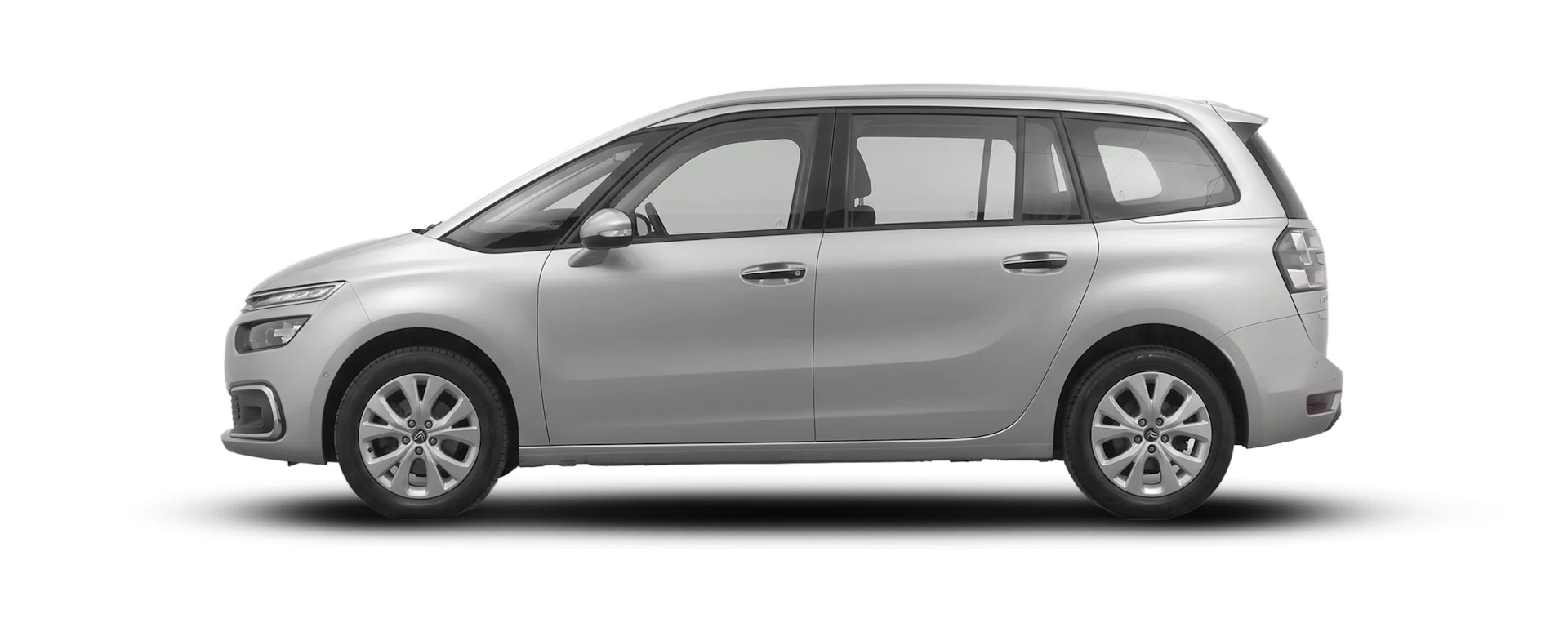
Citroen Grand C4 Picasso
Versatile 7-seat minivan
Overview
Citroën Grand C4 Picasso in Brief
The Citroën Grand C4 Picasso is a minivan designed for family use, with its key strengths being three individual second-row seats, two foldable extra seats, and a bright cabin. It is particularly well suited for buyers who need flexible space for child seats, passengers, and luggage.
The Grand is a longer version of the standard C4 Picasso. On the used car market, options are available from two generations, with both gasoline and diesel engines. Those looking for an automatic should pay close attention to the transmission type, as an automated manual transmission and a traditional automatic feel quite different to drive. Be sure to also explore other used Citroën vehicles.
Who Is the Citroën Grand C4 Picasso For?
The Grand C4 Picasso is worth considering when the most important features in a family car are cabin practicality and the ability to reconfigure the space as needed.
- For families with children: three individual middle-row seats make it easier to arrange passengers. It's worth testing whether your own child seats fit before making a purchase decision.
- For five-person vacation trips: folding down the third-row seats frees up significantly more cargo space for strollers and suitcases.
- For occasional seven-passenger transport: the rearmost seats add flexibility for school runs and activity trips.
- For hobbyists who need extra space: folding down the rear rows allows for various combinations of passengers and larger items.
Citroën Grand C4 Picasso Price on the Used Car Market
The price of a used Grand C4 Picasso is influenced primarily by generation, engine, transmission type, mileage, and service history. In terms of features, options such as a panoramic glass roof, a backup camera, and a power tailgate can affect the vehicle's appeal.
When comparing prices, it's worth distinguishing between first-generation models and the second generation introduced in 2013. There can also be significant differences in the technology found in automatics of the same age. You can find up-to-date vehicles for sale and their prices on this page. If the right car isn't available right now, feel free to ask one of Saka's car sales specialists for help.
Model Years and Generations
The Grand C4 Picasso was introduced in 2006. Two generations of the model were produced, after which it was renamed the Grand C4 SpaceTourer.
- First generation, 2006 to 2013: a seven-seat minivan featuring a large windshield, individual middle-row seats, and a third row that folds flat into the floor.
- First generation facelift, 2010: updates were made to the exterior, features, and engine lineup. This is still the first-generation body style.
- Second generation, from 2013: a completely redesigned body and cabin. Vehicle functions were consolidated onto a touchscreen, and features such as a 360-degree camera system became available. The early engine and transmission lineup differs from later models.
- Second generation facelift, 2016: the front-end styling was refreshed, and the infotainment and driver assistance systems were improved. The lineup also gained the combination of the PureTech 130 gasoline engine and the EAT6 automatic transmission.
- Name change, 2018: the Grand C4 Picasso became the Grand C4 SpaceTourer.
Check out the following tabs for more detailed information on engines, transmissions, and interior space, as well as buying tips and a comparison with other family cars!
Technical Specifications
Gasoline Engines
The gasoline lineup of the Grand C4 Picasso changed over the course of the model's lifecycle. Older vehicles may feature, for example, 1.6-liter VTi and THP versions. The VTi is a naturally aspirated engine, while the THP uses a turbocharger.
Later options in the second generation include the 1.2 PureTech 130 and the 1.6 THP 165. A gasoline model is worth considering especially when annual mileage is moderate and the vehicle is used frequently for short everyday trips. Identifying the engine version is also important for determining maintenance needs.
Diesel Engines
First-generation diesel options include 1.6- and 2.0-liter HDi engines. In the early phase of the second generation, options such as the 1.6 e-HDi 115 were available. Later options include the 1.6 BlueHDi 100, 1.6 BlueHDi 120, and 2.0 BlueHDi 150, among others.
Diesel is particularly well suited for regular long-distance driving. BlueHDi versions use exhaust gas treatment that relies on AdBlue fluid. A simple HDi or e-HDi designation does not indicate the same system. When making a practical choice, it is worth considering the transmission and maximum towing capacity in addition to the engine.
Transmissions and Drivetrain
The Grand C4 Picasso is front-wheel drive. There are three transmission options relevant to buyers:
- Manual: depending on the engine and model year, the lineup includes five- or six-speed manual transmissions.
- Automated manual transmission: transmissions known by designations such as BMP and ETG6 handle clutch operation and gear changes automatically. A noticeable interruption in power delivery during gear changes is part of how these systems work.
- Traditional automatic: the EAT6, for example, is a six-speed torque converter automatic. Its behavior differs from an automated manual transmission, particularly during acceleration from a stop and at low speeds.
Dimensions, Cargo Space, and Towing Capacity
The Grand C4 Picasso offers seven seats in a body approximately 4.6 meters long. The practicality of the cargo area depends significantly on whether the third-row seats are in use and how far forward the second-row seats have been slid.
The example figures below apply to the second-generation Grand C4 Picasso.
Feature | Example Version Data |
Length | 4,597 mm |
Width without mirrors | 1,826 mm |
Width with mirrors extended | 2,117 mm |
Wheelbase | 2,840 mm |
Cargo space with all seven seats in use | 165 L |
Cargo space with third row folded and second row moved back | 632 L |
Cargo space with third row folded and second row moved forward | 793 L |
Maximum volume with second and third rows folded | 2,181 L |
Maximum braked trailer weight | 1,500 kg |
The first cargo volume figures are measured below the cargo cover. The maximum volume represents the extended load space and is therefore not directly comparable to the standard cargo volume figure. Dimensions and volumes are based on Citroën's 2015 model brochure.
Towing capacity refers to the weight of the trailer including its load. The maximum permitted combined weight of the vehicle and trailer may also limit loading, meaning the maximum towing capacity may not always be fully utilized when the vehicle itself is fully loaded. The limits for your specific vehicle can be found in its registration documents.
Driving Experience and Top Features
Ride Comfort and Cabin
The character of the Grand C4 Picasso emphasizes relaxed travel and a spacious cabin. The large windshield brings light into the cockpit, and the elevated seating position makes it easier to get in and out of the vehicle. Controls operated through the second-generation touchscreen are worth trying during a test drive: adjusting the climate control, for example, feels different compared to a vehicle with dedicated physical buttons.
Top Features of the Model
Equipment varies by generation, trim level, and individual vehicle. When looking at a used Grand C4 Picasso, the following features are worth seeking out:
- Rearview camera and parking sensors: help with judging the rear corners of the vehicle.
- 360-degree camera system: assists with viewing the vehicle's surroundings when parking.
- Panoramic glass roof: adds brightness to the rear rows as well.
- Power tailgate: makes loading easier. Some facelifted models also feature hands-free opening activated by a foot gesture.
- Lounge or Relax comfort packages: may include features such as front seat massage and a front passenger footrest.
- Second-row fold-out tables and sunshades: add practicality for family travel.
- Adaptive cruise control and driver assistance systems: availability and scope of features vary by model year.
Buyer's Guide
Maintenance and Running Costs
The Citroën Grand C4 Picasso's economic strength lies in its combination of space and fuel efficiency. The second-generation BlueHDi diesel engines in particular offer moderate fuel consumption for a seven-seat family car, making the model a competitive option in terms of fuel costs compared to minivans in the same size class, such as the Volkswagen Touran and Renault Grand Scénic.
When it comes to maintenance and repair costs, the Grand C4 Picasso cannot straightforwardly be considered cheaper than its competitors. When buying used, costs are influenced by the car's age, mileage, and engine and transmission variant. Low fuel consumption can reduce day-to-day expenses, but repairs to the timing system, transmission, or diesel emissions system, for example, can significantly increase costs in any given year. Overall, the Grand C4 Picasso is a good fit for a buyer who values a spacious and fuel-efficient family car and is prepared for the maintenance and repair expenses that come with an aging minivan.
Saka's tip: Ask the seller to walk you through the upcoming services and the car's equipment. It's also worth testing how your own child seats and belongings fit inside.
What Should You Check on a Used Grand C4 Picasso?
Checklist
- Service history: check the dates, mileage readings, and repairs carried out. Also find out what major service work is coming up next.
- Engine: pay attention to cold starts, smoothness at idle, and any warning lights. Check the service requirements specific to the engine variant and whether they have been carried out.
- Transmission: test pulling away, reversing, and gear changes both cold and warm. On a manual car, also assess clutch operation.
- Suspension and tires: check tire condition and evenness of wear. Listen for suspension noises during the test drive and check that the car brakes evenly.
- Seat mechanisms: try all the sliding adjustments, backrest settings, and folding on the middle-row seats. Also raise the third-row seats into the seating position.
- Access to the rear row: test the arrangement with your own child seats. A fitted child seat may limit the movement of the middle-row seat.
- Electrical equipment and climate control: test the displays, air conditioning, and heating, as well as parking sensors, cameras, and seat heaters depending on the car's equipment. On the second generation, many of the car's functions are controlled via a touchscreen.
- Body and cargo area: check the paintwork, dents, and signs of previous repairs. Also verify the condition of the cargo area cover, floor panels, and any other parts that should be included.
- Tow hitch, if applicable: check the condition of the hitch and electrical connector, as well as the locking mechanism of a detachable hitch and whether the key is present.
Engine-Specific Checks
With the 1.2 PureTech gasoline engine, pay close attention to the timing belt inspection and replacement history, as well as any documentation related to oil consumption. The manufacturer has identified issues with premature timing belt deterioration and oil consumption on certain earlier PureTech engines. This does not mean that every car has a problem. Ask to see the service and repair records.
Gasoline or Diesel?
- Choose gasoline if your mileage is moderate and most of your trips are short. Still, make sure to carefully review the service history of the specific engine you are considering.
- Choose diesel if you regularly drive long commutes or road trips. Weigh the fuel savings against taxes and maintenance costs.
Manual, Automated Manual, or EAT6?
A manual transmission suits a buyer who prefers to shift gears themselves and does not need an automatic for daily driving. In city traffic and stop-and-go conditions, the EAT6 is a natural choice for those looking for a traditional automatic driving experience. Anyone considering a car with a BMP or ETG6 transmission should plan for a relaxed test drive. The gear changes feel different from the EAT6, so it is worth finding out your own preference in practice.
Competitors and Comparison
Citroën's Own Alternatives
- Citroën C4 Picasso: a shorter alternative when five seats are enough. It's worth including in your comparison if you appreciate the interior of an MPV but don't need a third row of seats.
- Citroën Berlingo: the passenger car version suits buyers who prioritize a high cargo area and the practicality of sliding doors. Body length and seating capacity vary by version.
Comparison with Competitors
- Volkswagen Touran: a direct point of comparison for families looking for a versatile MPV. Compare the usability of the middle row, the space in the third row, and the shape of the cargo area.
- Renault Grand Scénic: an alternative for those looking for a seven-seat family car. The generation affects seating arrangements, so beyond just the number of seats, it's worth trying out the cabin's flexibility.
- Ford S-MAX: a larger alternative when you need more space and value driving dynamics. The lineup also includes all-wheel-drive diesel versions.
- Peugeot 5008: the first generation is an MPV, the second generation is an SUV. Choose a model in the same price range and age group for comparison, and test whether child seats and luggage fit comfortably.
Summary – Why Choose the Grand C4 Picasso?
The Grand C4 Picasso is an interesting option when you want three separate middle-row seats, a bright and airy cabin, and the ability to use seven seats without the exterior dimensions of a large minivan.
When making your choice, it's worth focusing on hands-on testing: do child seats fit side by side, can you get to the third row without difficulty, and is there enough cargo space with a typical number of passengers? Once the space suits your everyday needs, choosing the engine and transmission becomes easier. Explore the vehicles in Saka's used car selection.
Frequently Asked Questions
What is the difference between the C4 Picasso and the Grand C4 Picasso?
The Grand C4 Picasso is a longer model with a third row of seats. The standard C4 Picasso seats five. The Grand is particularly well suited for buyers who need extra seating or more luggage space for five passengers.
What is the difference between the Grand C4 Picasso and the Grand C4 SpaceTourer?
The Grand C4 Picasso was renamed the Grand C4 SpaceTourer in 2018. This was a name change for the same second-generation model. Engines and equipment also evolved during production, so the specifications are not identical across all model years.
Does the Grand C4 Picasso have a true automatic transmission?
Some models come with a conventional torque converter automatic, such as the EAT6. However, some cars listed as automatic use an automated manual transmission, such as the BMP or ETG6 type. It is worth confirming the transmission type before a test drive.
Is the Grand C4 Picasso available with all-wheel drive?
No. The Grand C4 Picasso is front-wheel drive only.
Can three child seats fit side by side in the Grand C4 Picasso?
The three individual seats in the middle row make it a good option for this need. The actual fit depends on the dimensions of the child seats and the approved attachment methods. Try your own seats in the car before purchasing.
How much cargo space is left with all seven seats in use?
In the second-generation Grand C4 Picasso, approximately 165 liters of cargo space remains when all seven seats are in use. Folding down the third row significantly increases the available space.
What common issues should I look out for in the Grand C4 Picasso?
The items to check depend on the engine. For the 1.2 PureTech, key things to inspect are the condition of the timing belt and any unusual oil consumption. For BlueHDi diesel models, it is worth checking whether any repairs related to the AdBlue tank have been carried out. These should not be generalized to all Grand C4 Picassos.
When does the timing belt need to be replaced on the Grand C4 Picasso?
The replacement interval depends on the engine and the vehicle's current service schedule. Verify the mileage and time limits using the VIN, and check the date and mileage of the previous replacement. There is no single universal replacement interval for the entire model range.
Easy car deals at Saka!
Saka is Finland's largest used car dealership, and our operations are based on strict quality control. We screen the used car inventory to select only the best vehicles and ensure that every car we sell meets our promises.
- Flexible car financing: We offer pre-negotiated financing that allows you to pay for your car in easy monthly installments – if needed, even without a down payment.
- Trading in your car: Sell us your old car! We buy cars less than 10 years old with under 225,000 km on the odometer, and we accept them as trade-ins when you upgrade to a newer car.
- Home delivery: We deliver your dream car to Saka dealerships or directly to your doorstep anywhere in Finland. Read more about delivery.
- Vehicle inspection: All of our used cars priced over 10,000 euros undergo a condition inspection by a third party. Read more about the condition inspection here.
- Battery test: The drive batteries of our cars are tested at Saka using the Austrian Aviloo battery test. Read more about the battery test here.
Interested in a Grand C4 Picasso?
Get in touch!Contact one of our experts and find the perfect Grand C4 Picasso for you.