
Found 42 cars







Showing 20 / 42 cars
Skoda Kodiaq
The perfect combo of space, price, and quality
Overview
Skoda Kodiaq in Brief
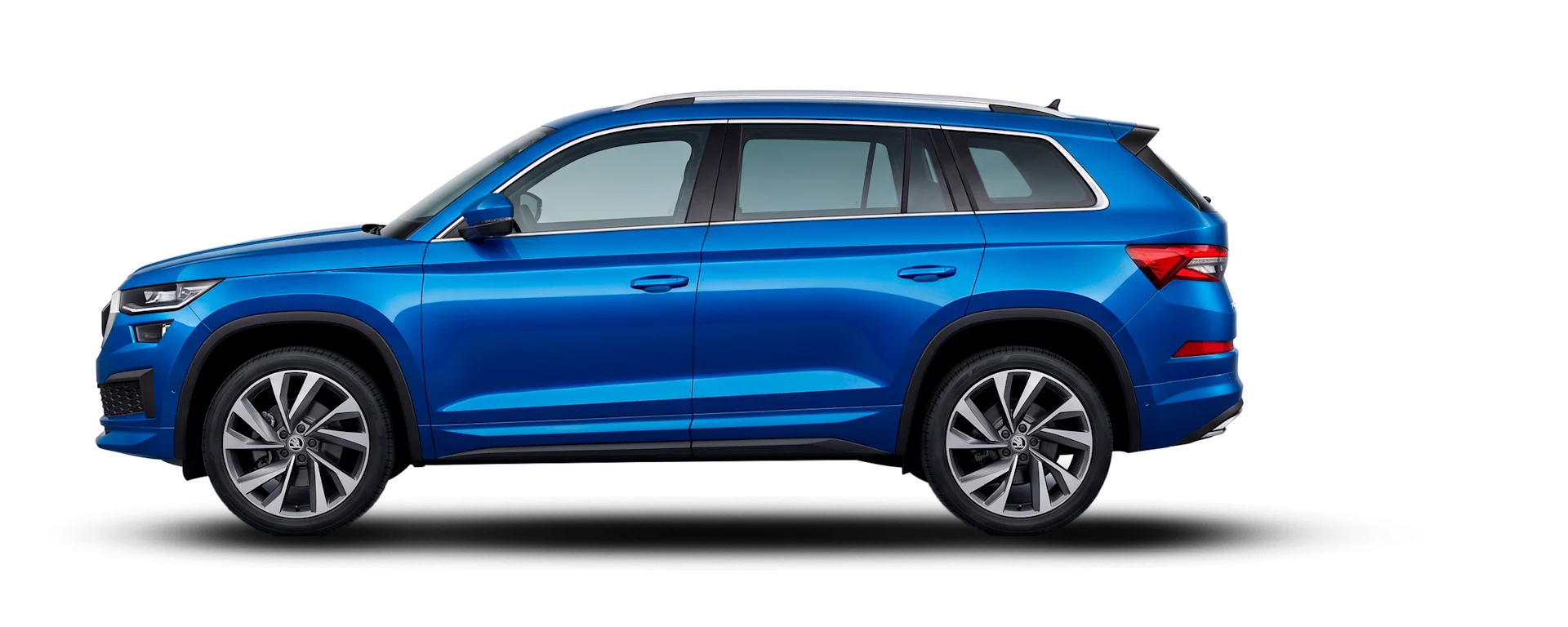
The Skoda Kodiaq is a large SUV whose key strengths include spacious interiors, a large cargo area, a good level of equipment, reliability, and the option of seven seats. The model is well suited for families that need more space than average, but there are also options for towing, long-distance driving, and those who value performance.
The used Kodiaq market is dominated by the first generation, which offers gasoline and diesel engines, front-wheel and all-wheel drive, and manual and automatic transmission versions. The second generation added a mild hybrid and the plug-in hybrid Kodiaq iV to the lineup.
The Kodiaq's cargo space and seating capacity depend on the version. Not all vehicles have seven seats — for example, the plug-in hybrid is a five-seater. Be sure to also check out other used Skoda vehicles.
Who Is the Skoda Kodiaq For?
The Kodiaq is worth considering especially when a standard mid-size SUV doesn't offer enough space, or when the vehicle needs to serve multiple different purposes.
- For families with children: the wide cabin, versatile rear seats, and large cargo area make it easier to transport kids, strollers, and luggage.
- For those who need seven seats: the third row adds two extra seats for occasional or regular use. The rear row is best suited for children and shorter passengers.
- For those who tow a trailer: the Kodiaq is available in all-wheel-drive diesel and gasoline versions with towing capacities that, depending on the version, are suitable for larger trailers as well.
- For high-mileage drivers: a diesel model may be well suited for long trips and towing, while the elevated seating position and stable highway behavior support relaxed, comfortable driving.
- For those looking for a plug-in hybrid family car: the Kodiaq iV makes it possible to cover a large portion of everyday driving on electricity, provided the car can be charged regularly. In return, you'll need to accept five-seat capacity and a cargo area that differs from comparable combustion engine models.
Price of a Used Skoda Kodiaq
In addition to the model year and mileage, the price of a Kodiaq is influenced by the powertrain, drivetrain, number of seats, and trim level. Seven seats, all-wheel drive, a tow hitch, a fuel-powered auxiliary heater, and comprehensive equipment can all raise the price — but at the same time, these features may be essential depending on how the car will be used.
At the time of review in September 2026, Saka's inventory included, for example, a 2018 diesel model with 245,000 kilometers driven for €14,900, a 2017 gasoline model with an automatic transmission and 215,000 kilometers driven for €17,500, and a 2025 plug-in hybrid with 125,000 kilometers driven for €36,900. These are illustrative examples only — for current prices and available vehicles, see the inventory on this page.
Model Years and Generations
The Kodiaq was introduced in 2016, and the first vehicles reached the market in 2017. The key model years and updates relevant to used car buyers are as follows:
- First generation from 2017 onward: the original lineup included 1.4 TSI and 2.0 TSI gasoline engines as well as 2.0 TDI diesel engines. It was available in front-wheel and all-wheel drive, in five- and seven-seat configurations, and with manual and automatic transmissions.
- Engine updates from 2018 onward: the 1.5 TSI replaced the 1.4 TSI. The lineup also expanded with Scout, SportLine, and Laurin & Klement versions, as well as the high-performance Kodiaq RS.
- First Kodiaq RS: the RS model introduced in 2018 featured a 176-kilowatt (240-horsepower) twin-turbocharged 2.0 BiTDI diesel engine, a DSG transmission, and all-wheel drive.
- 2021 refresh: the front end, lights, equipment, and engine lineup of the first generation were updated. The refreshed RS model's diesel was replaced by a 180-kilowatt (245-horsepower) 2.0 TSI gasoline engine.
- Second generation from 2024 onward: the Kodiaq grew slightly in length, the cabin and user interface were redesigned, and cargo space increased. New options included a 1.5 TSI mild hybrid and the plug-in hybrid Kodiaq iV.
Technical Specifications
Engines and Powertrains
The first-generation Kodiaq offers several options for different needs:
- 1.4 TSI: A gasoline engine found in early model years, available in 125 and 150 horsepower versions. The more powerful version is also available with all-wheel drive.
- 1.5 TSI ACT: Replaced the 1.4 TSI. The engine's ACT system can temporarily deactivate some cylinders under light load to reduce fuel consumption.
- 2.0 TSI: A gasoline option for buyers who want more performance than the smaller TSI engines offer. These versions typically come with a DSG transmission and all-wheel drive.
- 2.0 TDI: A common diesel engine in used Kodiaq models, available in several power outputs. Diesel is particularly well-suited for long distances, high mileage, and towing.
- Kodiaq RS: The original RS uses a 240-horsepower BiTDI diesel. The refreshed 2021 RS uses a 245-horsepower 2.0 TSI gasoline engine.
The second-generation lineup includes, depending on the market and model year, a 1.5 TSI mild hybrid, 2.0 TSI, 2.0 TDI, and the plug-in hybrid Kodiaq iV. The mild hybrid cannot be charged via a plug and does not travel long distances on electricity alone.
Kodiaq iV Plug-In Hybrid
The second-generation Kodiaq iV combines a 1.5-liter TSI gasoline engine, an electric motor, and a six-speed DSG transmission. The combined system output is 150 kilowatts, or 204 horsepower. These models are always front-wheel drive.
The Kodiaq iV's battery net capacity is 19.7 kWh. The manufacturer's stated electric WLTP range exceeds 100 miles depending on the version. For example, one vehicle listed for sale by Saka had a stated electric range of up to 124 kilometers. Actual range is affected by factors such as temperature, speed, heating, and load.
In addition to AC charging, the plug-in hybrid supports DC fast charging of up to 50 kilowatts. However, it is a five-seater, so the iV is not suitable for buyers who need a third row of seats.
Drive Configurations and Transmissions
The Kodiaq is available in both front-wheel drive and all-wheel drive versions. Front-wheel drive is common with smaller gasoline engines and some diesel variants. All-wheel drive is available primarily on the more powerful 2.0 TSI and 2.0 TDI versions, as well as RS models.
All-wheel drive improves traction and acceleration on slippery surfaces, but winter grip still depends on tires, driving speed, and conditions. All-wheel drive also does not automatically mean the highest possible towing capacity — the permitted towing mass is determined by the engine, transmission, and model variant.
Kodiaq models use six- and seven-speed DSG dual-clutch transmissions. First-generation models also come with six-speed manual transmissions, particularly with smaller engines.
Dimensions, Seating, and Cargo Space
The first-generation Kodiaq is 4,697 millimeters long and 1,882 millimeters wide, excluding side mirrors. The second generation grew to 4,758 millimeters in length, while the width remained nearly unchanged. The added length primarily benefits the passenger cabin and cargo area. Manufacturer-stated VDA cargo figures for the second generation:
Version | Cargo space with seats in use | Cargo space with third row folded |
Five-seat combustion engine model | 910 l | No third row |
Seven-seat combustion engine model | 340 l | 845 l |
Five-seat Kodiaq iV | 745 l | No third row |
In the seven-seat model, cargo space with the third row in use is significantly smaller than in the five-seat configuration. If you need to carry seven passengers and a lot of luggage, it's worth testing the available space in person before making a purchase decision.
Towing Capacity
The maximum permitted braked trailer mass for the Kodiaq varies considerably by version. In some all-wheel drive models, it can be up to 2,500 kilograms, but smaller engines, front-wheel drive variants, and the plug-in hybrid may have lower ratings.
Anyone planning to tow should check the vehicle's registration documents for the maximum permitted braked trailer mass. It's also important to consider the vehicle's payload capacity, combined vehicle and trailer mass, driver's license class, and the tow hitch specifications. All-wheel drive or engine power alone does not indicate how heavy a trailer a given vehicle is permitted to tow.
Driving Experience and Top Features
Driving Feel and Practicality
The Kodiaq offers a high seating position and good forward visibility. The suspension in standard versions prioritizes comfort and a stable ride. The large body is especially noticeable in tight parking spaces, making a backup camera, parking sensors, and a surround-view camera system practically useful features.
In first-generation models, the longitudinal adjustment of the second-row seats helps distribute space between passengers and cargo. In the seven-seat version, access to the third row is achieved by tilting and sliding the second-row seat.
The SportLine trim gives the car a sportier appearance, but it is not the same as the performance-oriented RS. Laurin & Klement emphasizes premium equipment, while the Scout version features off-road-inspired details.
Top Features
When comparing used Kodiaq models, the following features are especially worth looking for:
- Fuel-operated auxiliary heater
- Heated windshield, steering wheel, and seats
- Adaptive cruise control
- LED or Matrix LED headlights
- Backup camera or 360-degree camera system
- Blind-spot monitoring
- Power tailgate
- Canton audio system
- Digital instrument cluster
- Adaptive DCC suspension
- Tow hitch
- Panoramic sunroof
- Keyless entry and start
Buyer's Guide
What should you check when buying a used Skoda Kodiaq?
When inspecting a Kodiaq, focus your checks on the specific car's engine, transmission, drivetrain, seating capacity, and features. A maintenance need doesn't necessarily mean there's a fault affecting the entire model range.
- Service history: check the dates and mileage of scheduled services, any repairs carried out, and upcoming maintenance due.
- Engine version and timing components: check the engine size and model. For example, the 1.4 TSI and 2.0 TDI use a timing belt, while the 2.0 TSI has a timing chain. Maintenance requirements should be verified for each specific engine.
- DSG transmission: test pulling away from a stop, slow creeping, reversing, and gear changes both cold and warm. Compare the transmission's service history against the maintenance schedule for that specific DSG version.
- All-wheel drive: confirm which AWD version the car has and what drivetrain maintenance has been performed. Service requirements should be checked using the car's VIN and the relevant maintenance schedule.
- Seven-seat version: check the registered seating capacity and verify that the third-row seats, seatbelts, and folding mechanisms all function properly.
- Body and chassis: on a large vehicle like this, pay particular attention to even tire wear, wheels, brakes, and any parking damage to bumpers and doors.
- Electrical features: test the auxiliary heater, air conditioning, cameras, parking sensors, power tailgate, keyless entry, and multimedia system.
- Kodiaq iV: test charging, check the charging cables, and request any available data on the battery's condition. Also confirm that the five-seat configuration and cargo space meet your needs.
Maintenance and running costs
The Kodiaq's running costs are typically moderate compared to other vehicles of similar size. Compared to smaller passenger cars, the Kodiaq's size and weight are reflected in fuel consumption, tire costs, and brake wear. Large wheels can increase the cost of a tire set and slightly reduce ride comfort. All-wheel drive and a DSG transmission involve more drivetrain components requiring maintenance than a front-wheel-drive manual.
When estimating the total cost of ownership for a diesel model, the fuel tax on diesel vehicles must be factored in—this does not apply to gasoline models. The fuel consumption of the more powerful 2.0 TSI can be noticeably higher than smaller TSI versions, especially in city driving and when towing.
The cost advantage of the plug-in hybrid depends on how often it's charged. If the Kodiaq iV is charged regularly and everyday trips fall within the electric range, use of the gasoline engine can be kept to a minimum. Without regular charging, the onboard battery adds to the vehicle's weight without delivering the full benefit of its electric range.
Five or seven seats?
Choose the seven-seat Kodiaq if you need the extra seats at least occasionally. The third row expands the car's versatility but reduces cargo space when in use. Adults should try the rear row themselves, as knee and legroom are more limited than in the first two rows. The five-seat version is a better fit if maximum cargo space is more important than the extra seats. The structure beneath the cargo floor may vary by configuration, so it's worth checking the shape of the load area as well.
Gasoline, diesel, or plug-in hybrid?
- Choose gasoline if your annual mileage is moderate, your driving involves a lot of short trips, or you want to avoid the diesel fuel tax. The 1.4 and 1.5 TSI are typical family car options, while the 2.0 TSI offers more performance.
- Choose diesel if you do a lot of highway driving, tow a trailer, or value strong low-end torque. Also compare the drivetrain type and the towing capacity listed in the registration.
- Choose the plug-in hybrid if you can charge at home or at work and a five-seat car is sufficient. The Kodiaq iV is best suited for use where everyday trips can often be covered on electricity, but the flexibility of a gasoline engine is desired for longer journeys.
Front-wheel drive or all-wheel drive?
A front-wheel-drive Kodiaq is sufficient for everyday road driving and can offer a lighter and simpler alternative to AWD. Good winter tires are essential for traction regardless of drivetrain. All-wheel drive is worth choosing if you regularly drive on snowy cottage roads, steep driveways, or tow a trailer in conditions where extra traction makes getting moving easier.
Standard Kodiaq, SportLine, or RS?
The standard Kodiaq is the most natural choice when the top priorities are space, comfort, and reasonable running costs. The SportLine suits buyers who want a sportier appearance and often a higher level of equipment without the RS model's most powerful engine.
The RS is the most performance-oriented option in the lineup. The diesel-powered 240-horsepower RS and the post-facelift 245-horsepower gasoline model differ significantly from each other. When searching for a used RS, it's worth checking the engine in addition to the model year rather than making a decision based on the RS badge alone.
Competitors and Comparison
Comparison Between Skoda Models
- Skoda Karoq is shorter and more agile than the Kodiaq. It is a good fit if five seats and a smaller cargo area are considered sufficient.
- Skoda Superb offers a large cargo area and spacious rear seating in a lower-profile sedan. It is worth considering if a high driving position or a third row of seats is not needed.
- Skoda Enyaq is a fully electric option for those looking for a five-seat, spacious family car. The Kodiaq offers more powertrain options and the possibility of seven seats.
The Kodiaq is the most well-justified choice in Skoda's lineup when you need the most versatile cabin possible, a large cargo area, seven seats, or strong towing capacity.
Comparison With Competitors
- Volkswagen Tiguan is smaller than the Kodiaq in its standard body version. Among used cars, the longer seven-seat Tiguan Allspace is a closer match.
- Kia Sorento offers seven seats and more electrified powertrain options than the Kodiaq, as the model is available with both a hybrid and a plug-in hybrid.
- Hyundai Santa Fe is a spacious family car available in seven-seat versions and with multiple powertrain options.
- Peugeot 5008 offers seven seats, but the engine, transmission, and drivetrain options available in used models differ from those of the Kodiaq. The Kodiaq is the stronger choice, especially for those looking for all-wheel drive.
Summary
The Skoda Kodiaq's greatest strength is its ability to combine car-like drivability with a large and versatile cabin. The five- and seven-seat versions serve different needs, so it is worth looking beyond just the model name when choosing the right car.
The wide selection of first-generation used cars makes it possible to compare gasoline, diesel, front-wheel drive, all-wheel drive, and various trim levels. The second generation adds more interior space, a mild hybrid, and a plug-in hybrid. The final decision ultimately comes down to the number of seats, powertrain, drivetrain, towing capacity, and service history.
Skoda Kodiaq – Frequently Asked Questions
Is the Skoda Kodiaq a good used car?
Yes, the Kodiaq is a great option for many purposes and is extremely popular as a family car — especially when spacious interior room, a large cargo area, or seven seats are needed. When searching for the right one, key factors include the engine, transmission, drivetrain, service history, and the vehicle's previous use.
Does the Skoda Kodiaq always have seven seats?
No, it doesn't. The Kodiaq is available in both five- and seven-seat configurations. The seating capacity is listed in the vehicle's registration and listing details. The plug-in hybrid Kodiaq iV is a five-seater, as the hybrid system's battery pack takes up the space needed for the third row of seats.
Does the Skoda Kodiaq have a timing belt or a timing chain?
It depends on the engine. For example, the 1.4 TSI and 2.0 TDI engines use a timing belt, while the 2.0 TSI uses a timing chain. The exact configuration and maintenance schedule should be confirmed based on the specific engine version.
Is the Kodiaq available with all-wheel drive?
Yes, it is. All-wheel drive is available primarily on the 2.0 TDI and 2.0 TSI versions, as well as the Kodiaq RS. However, not all Kodiaq models come with all-wheel drive.
How large is the cargo area in the Kodiaq?
The cargo area size depends on the generation and which rows of seats are in use. When the third row is in use, the available cargo space decreases significantly.
What is the towing capacity of the Kodiaq?
The maximum braked trailer weight can be up to 2,500 kilograms on the most powerful all-wheel-drive versions. The exact towing capacity depends on the engine, drivetrain, and model year, so it should be verified in the vehicle's registration documents.
What is the difference between the SportLine and the RS?
The SportLine is a sportily styled trim level, while the RS is the highest-performance model in the lineup. The first Kodiaq RS uses a 240-horsepower BiTDI diesel engine, and the updated RS uses a 245-horsepower TSI gasoline engine.
What is the difference between the Kodiaq and the Karoq?
The Kodiaq is larger than the Karoq. It offers more passenger and cargo space, as well as the option for seven seats. The Karoq is easier to maneuver in the city and is a sufficient choice for buyers who don't need the extra space the Kodiaq provides.
Does the Kodiaq have a DSG transmission?
Most used Kodiaq models come with a DSG automatic transmission, but manual transmission options are also available from the first generation.
Easy car deals at Saka!
Saka is Finland's largest used-car dealer, and our operations are built on strict quality control. We select only the best examples among used cars and make sure every car we sell lives up to our promises.
Every used car priced over €10,000 that comes up for sale at Saka undergoes an independent third-party condition inspection, and the key findings are compiled for the customer in the Rehti certificate – the new standard for used-car condition inspections.
Why buy a car from Saka?
- Thorough condition inspection and the Rehti certificate: Our used cars priced over €10,000 undergo an independent third-party condition inspection, and the batteries of electric cars and plug-in hybrids are tested with the Aviloo battery test. The key findings of the inspection are compiled for the customer in the Rehti certificate. Read more about the Rehti certificate, the condition inspection and the battery test.
- Flexible car financing: We offer ready-negotiated financing, letting you pay for your car easily in even monthly instalments – even without a down payment if needed.
- Trading in your car: Sell us your old car! We buy cars under 10 years old with under 225,000 km on the clock. When you buy a car from us, we'll take your old car in trade.
- Home delivery: We deliver the car of your dreams to a Saka showroom or straight to your front door anywhere in Finland. Read more about home delivery.
On our site you'll also find plenty of information on different car models and fuel types. On our media page you'll find, besides our sweepstakes, things like:
- Guides to buying an electric car, a hybrid car and a used car
- Test-drive videos, where experienced car journalist Anniina Pohjonen test-drives Saka's most popular cars
- Tip videos, where our car salespeople answer the most common questions about choosing a car
- Stylish vibe videos of the most popular car models
Interested in a Kodiaq?
Get in touch!Contact one of our experts and find the perfect Kodiaq for you.