
Found 10 cars





Showing 10 / 10 cars
All cars shown
Mercedes-Benz Sprinter
Star-class space and reliability
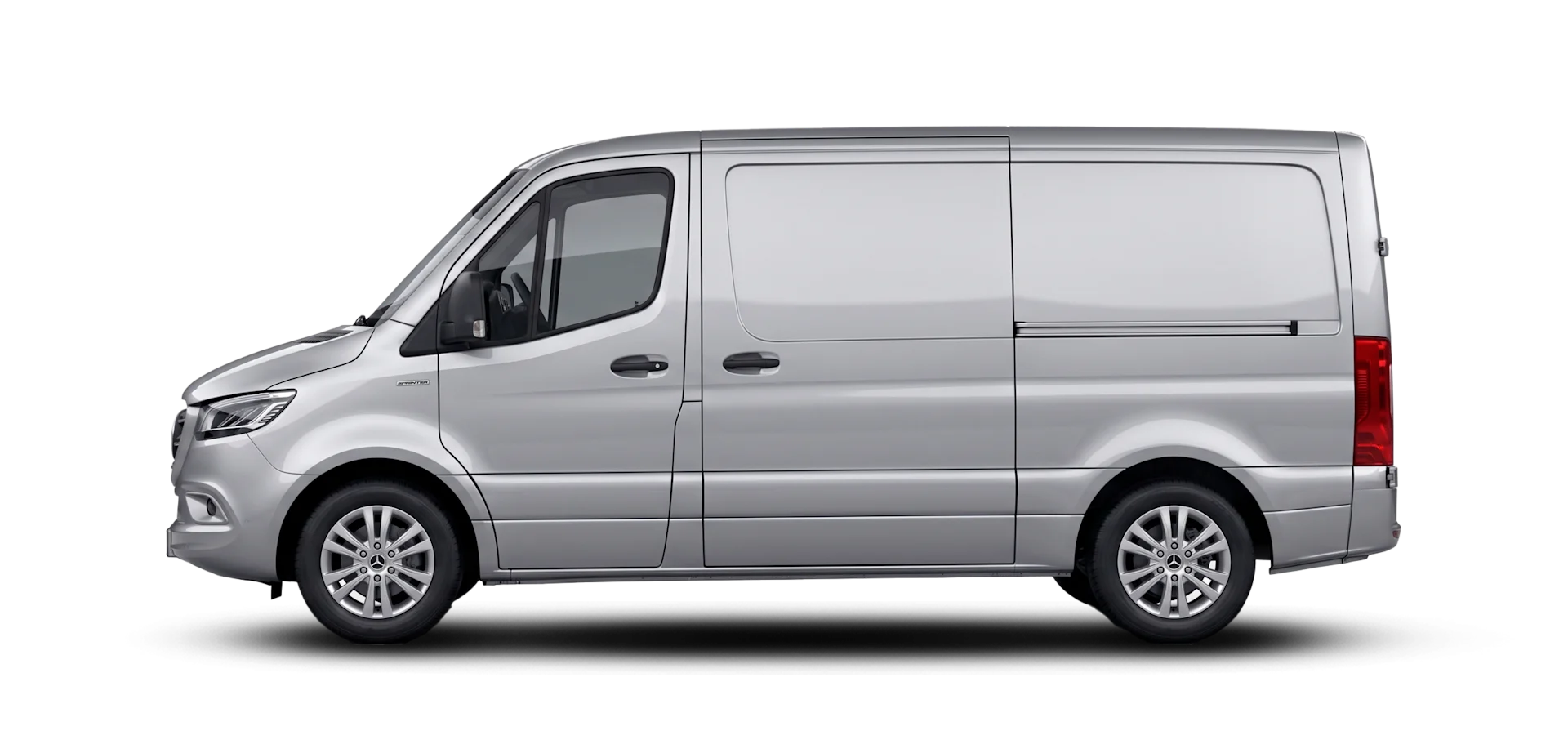
Overview
Mercedes-Benz Sprinter in Brief
The Mercedes-Benz Sprinter is one of the most well-known names in the large van segment. It is a commercial vehicle that combines a large cargo area, versatile body options, and the professional-grade quality impression typical of Mercedes-Benz. The Sprinter is a familiar sight at transport companies, construction sites, as service vehicles, in passenger transport, and as the base for motorhomes.
As a used vehicle, the Sprinter appeals to buyers who need more space and payload capacity than a standard van. The lineup includes panel vans of various lengths and heights, versions suited for passenger transport, chassis cabs, crew cab models, and four-wheel-drive Sprinters. The model's strength lies in the fact that the Sprinter is not just one van model, but a broad commercial vehicle family designed for a wide range of work and transport needs.
The most important generations of the Sprinter on the used car market are the second-generation W906 and the newer third-generation W907 and W910. Older first-generation models are still available, but the majority of used market interest is focused on newer diesel-powered examples.
Who Is the Mercedes-Benz Sprinter For?
The Mercedes-Benz Sprinter is suited for a buyer who needs a large and versatile commercial vehicle for work, transport, or as the basis for a custom build. It is not the smallest or lightest van — its strengths lie in space, adaptability, and a package well-suited for professional use.
The Mercedes-Benz Sprinter is right for you if:
- You need a large cargo area: The Sprinter offers multiple length and height options for freight transport.
- You're looking for a work vehicle for professional use: The model is well-suited for transport operators, tradespeople, the construction industry, and mobile service work.
- You want a Mercedes-Benz commercial vehicle: The Sprinter brings the star badge's quality image and a more refined cab to the van segment.
- You need a passenger transport version: The Sprinter is also available in Kombi and Tourer configurations for carrying passengers.
- You're looking for a base for a camper or adventure vehicle: The long body, high roof, and sturdy chassis make the Sprinter a popular starting point for motorhomes and overland builds.
- You drive in varying conditions: Four-wheel-drive and newer AWD models are better suited for job sites, unpaved roads, and challenging weather conditions.
Used Mercedes-Benz Sprinter Pricing
In addition to model year and mileage, the Sprinter's price is particularly influenced by the body style and any pre-installed conversions. Panel vans, crew cabs, and motorhomes are best compared within their own categories.
At the time of review in October 2026, Saka's inventory included examples such as:
- A 2017 long-wheelbase, manual-transmission 316 CDI diesel for €16,900
- A 2021 long-wheelbase 316 CDI automatic for €43,900
- A 2023 six-seat 317 CDI automatic crew cab for €71,900
These prices are individual listing examples. For current available options, see the vehicle listings on this page.
Sprinter Model Years and Updates
The model history of the Mercedes-Benz Sprinter began in 1995. The most popular generations on the used market are the first-generation W901–W905, the second-generation W906, and the third-generation W907 and W910. There are significant differences between generations in terms of the cab, engines, safety features, four-wheel-drive technology, and driving comfort.
First Generation W901–W905
The first Mercedes-Benz Sprinter came to market in the mid-1990s. It replaced the older Mercedes-Benz T1 lineup and brought a noticeably more modern look to Mercedes commercial vehicles. First-generation Sprinters are now quite old, but they can still be found as budget-priced work vehicles, specialty builds, and older motorhomes.
Second Generation W906
The W906 generation arrived in 2006 and is an extremely important Sprinter generation on the used market. During this era, the Sprinter became a more modern, more spacious, and safer commercial vehicle. W906 models are widely available in various lengths, heights, and body configurations. This generation is appealing to many buyers because it offers a wide range of options, and prices are often considerably more affordable than newer-generation models.
Third Generation W907 and W910
The third generation arrived in 2018. With the W907 and W910, the Sprinter moved into a clearly more modern era: the cab, digital features, driver assistance systems, and equipment options all advanced significantly. This generation also introduced more drivetrain options and a more contemporary user experience. W907 refers to rear-wheel-drive and four-wheel-drive versions, while W910 denotes front-wheel-drive models.
In the 2021 technical update, the 2.0-liter diesel engine was expanded across the lineup, the 9G-TRONIC automatic replaced the previous seven-speed automatic, and the four-wheel-drive system was revised.
In the 2024 update, the multimedia system and driver assistance features were upgraded. Europe also received the eSprinter with new rear-wheel-drive technology, with battery options that differ significantly from the first electric model.
As used vehicles, W907 and W910 models are more expensive than the W906, but they are the right choice for buyers who value newer technology, greater comfort, and more modern safety equipment.
More information on engines, body styles, and what to check when buying can be found on the following tabs. You can also browse other Saka Mercedes-Benz used cars.
Technical Specifications
Diesel Engines and CDI Model Designations
The engine lineup for used Sprinters varies by generation. Second-generation and early third-generation models offer four-cylinder diesels as well as a 3.0-liter V6. For example, the early third-generation 316 CDI used a 2.1-liter diesel, while the 319 CDI featured a 190-horsepower V6 engine.
With the 2021 update, the 2.0-liter OM654 diesel became the engine for all drivetrain configurations. Depending on the version, it is available in 114, 150, 170, or 190 horsepower outputs. Examples of 2.0-liter diesel versions:
Model Designation | Power | Torque |
315 CDI | 110 kW / 150 hp | 340 Newton-meters |
317 CDI | 125 kW / 170 hp | 400 Newton-meters |
319 CDI | 140 kW / 190 hp | 450 Newton-meters |
CDI indicates a diesel engine. The numbers help give a general sense of the weight class and power output, but they do not reveal the vehicle's exact payload capacity or engine configuration.
Transmissions
The Sprinter is available with both manual and automatic transmissions. In newer diesel models, the options are a six-speed manual and a nine-speed 9G-TRONIC automatic. Early third-generation rear-wheel-drive models with automatics also used the seven-speed 7G-TRONIC PLUS transmission. The 9G-TRONIC was introduced for front-wheel-drive models from the start of that generation.
The 7G-TRONIC PLUS and 9G-TRONIC are torque converter automatics. They are especially helpful in stop-and-go and delivery driving. Automatics in older Sprinters may differ, so the transmission type should be confirmed in the specific vehicle's technical specifications.
Rear-Wheel Drive, Front-Wheel Drive, and Four-Wheel Drive
Rear-wheel drive is the Sprinter's traditional drivetrain configuration. It is found in many long panel vans, chassis cabs, and vehicles equipped for towing.
Front-wheel drive was introduced to the diesel lineup with the third generation in 2018. Its lower cargo floor makes repeated loading easier. For this reason, the interior dimensions of a front-wheel-drive model should not be assumed to match those of a comparable rear-wheel-drive version.
Four-wheel drive aids traction on snowy driveways, gravel, and job sites. The older selectable 4x4 system and the automatically distributing system introduced with the 2021 update differ from one another.
Body Styles and Seating Capacity
- Panel van: a body style designed for cargo transport and work use. Plywood lining, shelving, and a partition wall affect the available space.
- Crew van: a second row of seats allows for transporting a work crew, but reduces the space available for cargo. The vehicle may be based on a panel van or a chassis cab.
- Minivan and minibus: models configured for passenger transport, with varying seating capacity and vehicle classifications.
- Chassis cab: a base for applications such as a flatbed, a separate cargo body, or other superstructures.
- Camper van: a vehicle fitted out for living, where furniture, auxiliary batteries, and water systems reduce the remaining payload capacity.
The number of seats listed in an ad should be compared against the registration records. The number of sleeping berths is not the same as the number of passenger seats available while driving.
Dimensions and Cargo Space
In Finnish model designations, A1 indicates a short body, A2 a medium-length body, A3 a long body, and A4 an extra-long body. Roof height is specified separately, so A3 alone does not indicate a high roof.
Below are examples of early third-generation rear-wheel-drive, high-roof panel vans. The volumes in the table are manufacturer-stated cargo space figures. This information does not apply to front-wheel-drive models, dual-rear-wheel versions, or separate cargo bodies.
Specification | Medium A2, High Roof | Long A3, High Roof | Extra-Long A4, High Roof |
Overall length | approx. 5.93 m | approx. 6.97 m | approx. 7.37 m |
Width without mirrors | approx. 2.02 m | approx. 2.02 m | approx. 2.02 m |
Wheelbase | 3,665 mm | 4,325 mm | 4,325 mm |
Cargo floor length | approx. 3.27 m | approx. 4.31 m | approx. 4.71 m |
Cargo volume | approx. 10.5 m³ | approx. 14 m³ | approx. 15.5 m³ |
The usability of the cargo space is also determined by the door openings, the distance between the wheel arches, and any fixed fittings. If you are transporting long items or building out a camper, measure the available space in the specific vehicle. Working under a high roof is easier, but insulation and floor structures reduce the interior height. For parking garages, check the exterior height of the specific vehicle (and account for any roof racks).
Payload and Towing Capacity
Gross vehicle weight rating (GVWR) refers to the maximum allowable loaded weight of the vehicle. Payload indicates how much cargo can be added. The Sprinter is available, for example, in versions registered with a GVWR of 3,500 kilograms, as well as heavier truck-class versions. A long cargo area does not by itself mean a high payload: shelving, lifts, additional seats, and camper equipment all draw from the same weight allowance as the cargo being transported.
The maximum braked trailer weight for a diesel Sprinter can be up to 3,500 kilograms. This refers to the trailer's weight including its load. The vehicle's towing capacity, the combined weight of the vehicle and trailer, axle weights, and tow hitch limits should all be verified before selecting a suitable vehicle, especially if it will be used for towing.
The All-Electric eSprinter
Series production of the first eSprinter began in late 2019. The front-wheel-drive model had a usable battery capacity of 35 or 47 kilowatt-hours. It was designed specifically for local deliveries.
The updated eSprinter, which arrived in Europe in 2024, is rear-wheel drive. Its battery options offer 56, 81, and 113 kilowatt-hours of usable capacity. The larger batteries enable longer routes than before. Charging capabilities and towing capacities also differ from the older electric model, so the eSprinter name alone does not indicate the same operational capability. When comparing electric versions, the key factors are the daily route length under load and how charging will be arranged. You can find Saka's other electric vehicles here.
Driving Experience and Features
Driving Feel and Cab
The Sprinter's elevated seating position and large mirrors help with situational awareness in traffic. With a long body, the turning radius required and the swing of the rear end in tight spaces become more noticeable in everyday use. The suspension feel changes with the load, so a test drive in an empty vehicle does not tell the full story of what driving it on a workday will be like.
On longer trips, the driver's seat adjustments, lumbar support, and armrests are valuable. The third-generation cab may feature the MBUX touchscreen multimedia system. In addition to the seat, try connecting your phone and using the most important functions before making your decision.
Driver Assistance Systems and Safety
Depending on the model year and trim level, the Sprinter may be equipped with a crosswind assist, active braking assist, blind spot monitoring, and adaptive cruise control. A reversing camera or 360-degree camera system helps with parking and loading dock maneuvers in a large vehicle.
The availability of driver assistance features has changed across model updates. It is therefore worth comparing the equipment of an older work vehicle against the listing's feature list rather than the brochure for the latest model. It is also a good idea to test the camera view with the rear doors open and with any trailer attached.
Equipment
When comparing used Sprinters, pay particular attention to the following features:
- fuel-operated auxiliary heater and heated seats
- air conditioning and driver comfort seat or air suspension seat
- automatic transmission and cruise control
- reversing camera, parking sensors, and LED headlights
- cargo area lighting, plywood lining, shelving, and tie-down points
- number of side doors, rear door opening angle, and loading steps
- tow hitch and any rear-mounted tail lift.
The Worker and Pro Edition names describe specific model versions and equipment packages, but a pre-built work vehicle may include many aftermarket additions. Consider whether these suit your needs or whether the cargo area will require modifications.
Buyer's Guide
What to Check When Buying a Used Sprinter?
A delivery van, a construction site cargo van, and a camper van of the same age can be in very different condition. Find out the vehicle's previous use and focus on its actual condition.
- Service history: review scheduled maintenance, repairs, and upcoming service needs. Also confirm the exact engine and transmission version.
- Body and cargo area: inspect the lower edges of the doors, sills, sliding door operation, and floor condition. Look into any rust repairs or collision repairs.
- Fixtures and loading equipment: test the shelves, partition wall, tie-down points, and any lift. Make sure the installations are secure and documented.
- Test drive: test the startup, gear shifting, reversing, and braking. Ask for an explanation of any warning lights or malfunctions.
- Tires and heating: check the condition of the tires and their suitability for the vehicle's weight class. Test the auxiliary heater, air conditioning, and cameras.
- Registration details and modifications: confirm the number of seats, vehicle class, and permitted weights. Documents for a crew cab or camper conversion are part of the package.
- Equipment: verify that all equipment listed in the sales listing is present and functioning.
- eSprinter: test charging and find out the battery version, charging equipment, and any available information on the battery's condition.
Maintenance and Operating Costs
The running costs of a Sprinter are generally in the same range as other diesel vans of comparable size, such as the Ford Transit, Volkswagen Crafter, and Fiat Ducato. However, the service history, condition, and upcoming maintenance needs of a specific used vehicle have a greater impact on overall costs than the brand alone.
Fuel consumption is affected by the engine, body size, load, and route. A high-roof body and towing a trailer also increase consumption. Before purchasing, it's worth looking into upcoming maintenance needs and their costs.
What Body Size Is Right for Your Use?
Choose the body size based on your typical load. Measure your longest items, the shelving you need, and the available space at your loading area. A long A3 or extra-long A4 helps if your cargo requires more than four meters of floor space, but a mid-length van is easier to maneuver in tight yards.
A crew cab is useful if several workers regularly travel in the vehicle. However, extra seats take up space and reduce payload capacity. If the issue is the weight of the load, a longer body alone won't solve it. You'll also need a sufficient gross weight class and the required driving license category.
Rear-Wheel Drive or Four-Wheel Drive?
A rear-wheel drive Sprinter is well suited for highway driving and cargo transport. When empty, the rear wheels carry less weight, which can make it harder to get moving on a snowy or icy surface. A load on the rear axle improves traction on the drive wheels.
Four-wheel drive is useful if you frequently drive to unplowed job sites or tow a trailer from slippery loading areas. Used Sprinters come with both older selectable and newer automatically engaging four-wheel drive systems. If you don't regularly need four-wheel drive, the good condition of a rear-wheel drive vehicle and equipment suited to your work may be more important factors.
Diesel or eSprinter?
Diesel is a good fit for long and varied routes when it's difficult to fit charging stops into the workday. The eSprinter is worth considering if your daily mileage is predictable and the vehicle can be charged regularly at your own facility.
The suitability of the electric model is assessed based on the practical load, winter heating needs, and route speeds. The smaller battery of the early eSprinter and the larger batteries of the updated 2024 model serve different kinds of driving days. Factor in the time required for charging and the necessary charging arrangements.
Ready-Made Camper Van or a Build-Out Base?
A ready-made Sprinter camper van is a convenient option if its beds, kitchen, and storage spaces suit your needs. Check the operation of the heating, auxiliary battery, and water system, as well as any moisture damage. Also confirm the passenger seats available for use while driving.
From a panel van, you can build a camper perfectly tailored to your own needs. Choose the body length and roof height based on your planned interior layout. Also keep payload in mind: insulation, furniture, and accessories add weight to the vehicle, and after accounting for those, there needs to be enough payload remaining for passengers, water, and luggage.
Competitors and Comparison
Mercedes-Benz Sprinter competes in the large van segment. Its strengths include a wide model range, Mercedes-Benz's solid build quality, versatile body options, and a strong position in professional use. The Sprinter isn't always the cheapest option, but it is one of the most well-known and sought-after models in its class.
Comparison with Mercedes-Benz Commercial Vehicle Models
The Sprinter sits in the large van segment within Mercedes-Benz's commercial vehicle lineup. It is often compared to the smaller Vito and Vito Tourer models, as well as the electric eSprinter.
Smaller Mercedes-Benz Commercial Vehicles
- Mercedes-Benz Vito: A smaller van than the Sprinter, better suited for urban driving, lighter cargo transport, and tighter spaces.
- Mercedes-Benz Vito Tourer: A model focused on passenger transport, suitable for carrying small groups but not offering the same amount of space as the Sprinter.
Options Within the Sprinter Lineup
- Sprinter Panel Van: The base version designed for cargo transport and use as a work vehicle, with an emphasis on load space, payload capacity, and versatility.
- Sprinter Tourer: A version designed for passenger transport, with an emphasis on seating capacity, passenger comfort, and group transportation.
- Sprinter Chassis: A version intended as the base for special-purpose builds, on top of which structures such as a flatbed, box body, refrigerated transport solution, or motorhome can be constructed.
- eSprinter: The electric Sprinter, particularly well-suited for businesses and transport operations where routes are predictable and regular charging is possible.
Comparison with Competitors
The Sprinter's main competitors are the Ford Transit, Volkswagen Crafter, Fiat Ducato, Renault Master, Iveco Daily, and MAN TGE. All of these offer large load spaces and multiple body versions, but they differ in their areas of emphasis.
- Ford Transit: A highly well-known and widely used van that competes directly with the Sprinter, especially in professional use and transport.
- Volkswagen Crafter: A close competitor that emphasizes German commercial vehicle practicality, a wide model range, and, in newer models, its own technical platform.
- Fiat Ducato: A strong option especially as a motorhome base, as its front-wheel-drive layout and wide load space are well-suited for body building.
- Renault Master: A practical and often cost-effective option for businesses that need a large van at a reasonable purchase price.
- Iveco Daily: An option suited for heavier use, with an emphasis on a robust frame structure, payload capacity, and truck-like operation.
- MAN TGE: The technical sibling model of the Volkswagen Crafter, competing for the same buyers especially in business and transport use.
What Do These Models Have in Common?
The Sprinter's competitors share large load spaces, multiple length and height options, and a strong presence in commercial use. The Ford Transit and Renault Master are often cost-effective work vehicles, the Fiat Ducato stands out as a motorhome base, the Iveco Daily distinguishes itself with its heavy-duty structure, and the Volkswagen Crafter and MAN TGE offer a modern German alternative. The Mercedes-Benz Sprinter stands out from the crowd particularly thanks to its extensive model range, four-wheel-drive options, and reputation as a high-quality commercial vehicle for professional use.
Summary
The Mercedes-Benz Sprinter is a large and versatile commercial vehicle whose strengths include a spacious load area, a wide range of body styles, the Mercedes-Benz quality image, and a strong position in professional use. It is the right choice for a buyer who needs a work vehicle, a passenger transport vehicle, a base for a recreational vehicle, or a reliable platform for a special-purpose build.
Frequently Asked Questions – Mercedes-Benz Sprinter
Is the Mercedes-Benz Sprinter a good used van?
The Mercedes-Benz Sprinter is one of the most well-known and highly regarded large vans in the world. It is a great option for buyers who need a large, versatile utility vehicle suitable for professional use. The Sprinter's strengths include a spacious cargo area, multiple length and height options, a wide range of body configurations, and Mercedes-Benz's strong track record of technical innovation.
How large is the cargo area of the Mercedes-Benz Sprinter?
The size of the Sprinter's cargo area depends on the body length and roof height. Shorter models are well suited for lighter loads and city driving, while long and high-roof models offer significantly more space. In long-wheelbase models, the cargo floor length can exceed four meters.
Is the Mercedes-Benz Sprinter available with four-wheel drive?
Yes, the Mercedes-Benz Sprinter is available with four-wheel drive in certain versions. Older models are often referred to as Sprinter 4x4 variants, while newer versions feature a more advanced AWD system. Four-wheel drive is a great fit for buyers who drive on job sites, in snowy conditions, on unpaved roads, or need better off-road capability from an adventure vehicle.
What is the difference between the Sprinter W906, W907, and W910 models?
The W906 is the second-generation Sprinter, introduced in 2006, and is very common on the used market. The W907 and W910 belong to the third-generation Sprinter, which was introduced in 2018. The newer W907 and W910 models feature a more modern cab, more advanced driver assistance systems, improved digital solutions, and a wider range of drivetrain options.
Is the Mercedes-Benz Sprinter suitable as an adventure vehicle?
The Mercedes-Benz Sprinter is an excellent base for an adventure or camper van build. The long wheelbase, high roof, and sturdy chassis provide a solid foundation for building out interior solutions. The four-wheel-drive Sprinter is particularly appealing to buyers who want better off-road capability on rough terrain from their camper or adventure vehicle.
What is the eSprinter?
The eSprinter is the all-electric version of the Mercedes-Benz Sprinter. It is especially well suited for urban deliveries, commercial use, and predictable routes where regular charging is possible. Diesel models remain more common in the used Sprinter market, but the eSprinter is an important part of the model's more recent development.
What do Sprinter A2, A3, and A4 mean?
A2 refers to a medium-length body, A3 to a long body, and A4 to an extra-long body configuration. The designation alone does not indicate the roof height or the interior dimensions of the cargo area.
Is the Mercedes-Benz Sprinter rear-wheel drive or front-wheel drive?
The Sprinter is available in rear-wheel drive, front-wheel drive, and four-wheel drive versions. Front-wheel drive was introduced to the diesel lineup in 2018. The first eSprinter is front-wheel drive, while the updated electric model that arrived in Europe in 2024 is rear-wheel drive.
Can a diesel Sprinter be driven with a standard driver's license?
Yes, provided the vehicle's registered gross vehicle weight is no more than 3,500 kilograms and it has no more than eight passenger seats in addition to the driver. The lineup also includes heavier vehicles and minibus versions, so driving eligibility is determined by the registered specifications of the specific vehicle. Reducing the load does not change the gross weight class required by the driver's license.
Easy car deals at Saka!
Saka is Finland's largest used-car dealer, and our operations are built on strict quality control. We select only the best examples among used cars and make sure every car we sell lives up to our promises.
Every used car priced over €10,000 that comes up for sale at Saka undergoes an independent third-party condition inspection, and the key findings are compiled for the customer in the Rehti certificate – the new standard for used-car condition inspections.
Why buy a car from Saka?
- Thorough condition inspection and the Rehti certificate: Our used cars priced over €10,000 undergo an independent third-party condition inspection, and the batteries of electric cars and plug-in hybrids are tested with the Aviloo battery test. The key findings of the inspection are compiled for the customer in the Rehti certificate. Read more about the Rehti certificate, the condition inspection and the battery test.
- Flexible car financing: We offer ready-negotiated financing, letting you pay for your car easily in even monthly instalments – even without a down payment if needed.
- Trading in your car: Sell us your old car! We buy cars under 10 years old with under 225,000 km on the clock. When you buy a car from us, we'll take your old car in trade.
- Home delivery: We deliver the car of your dreams to a Saka showroom or straight to your front door anywhere in Finland. Read more about home delivery.
On our site you'll also find plenty of information on different car models and fuel types. On our media page you'll find, besides our sweepstakes, things like:
- Guides to buying an electric car, a hybrid car and a used car
- Test-drive videos, where experienced car journalist Anniina Pohjonen test-drives Saka's most popular cars
- Tip videos, where our car salespeople answer the most common questions about choosing a car
- Stylish vibe videos of the most popular car models
Interested in a Sprinter?
Get in touch!Contact one of our experts and find the perfect Sprinter for you.