
Found 4 cars




Showing 4 / 4 cars
All cars shown
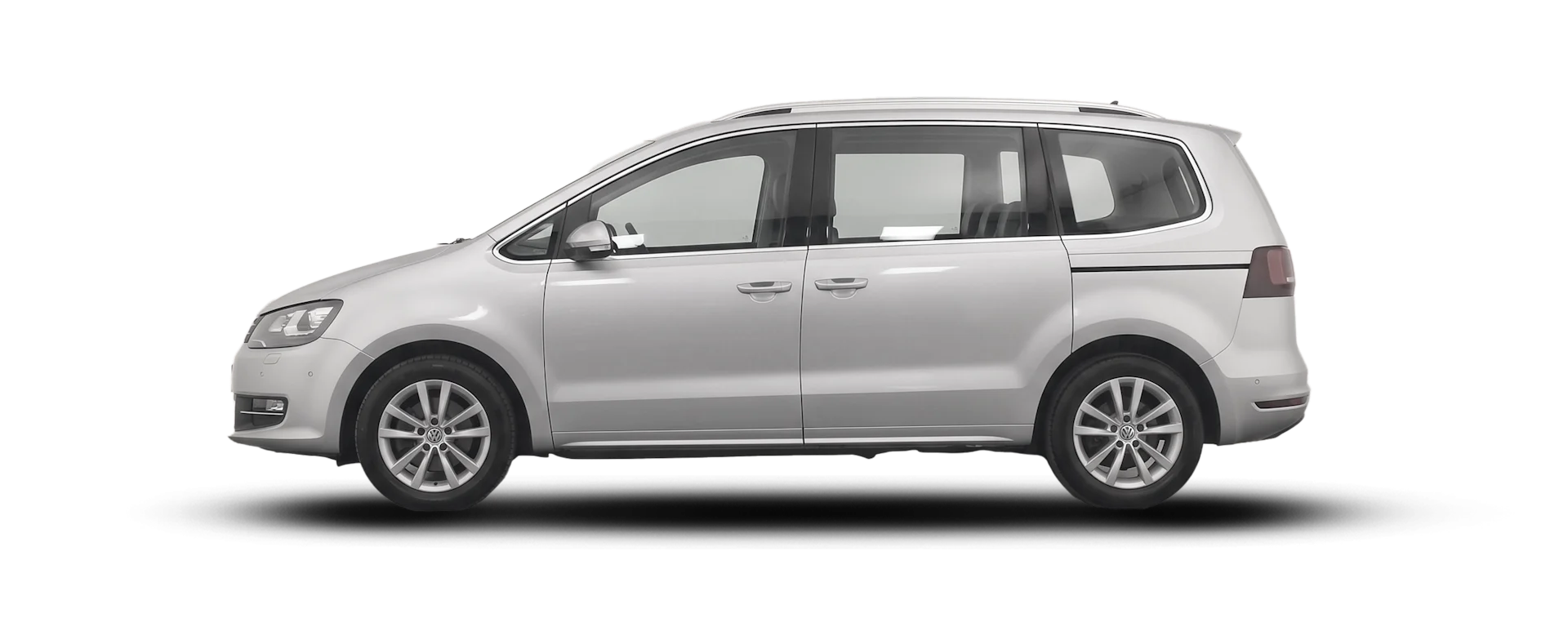
Volkswagen Sharan
Practical family car with convenient sliding doors
Overview
Volkswagen Sharan in Brief
The Volkswagen Sharan is a large minivan designed to carry seven passengers and their cargo. On the used car market, the most common models are from the second generation (2010–2022), characterized by a wide cabin, three separate middle-row seats, floor-folding rear seats, and sliding doors on both sides. In Finland, the used Sharan market is dominated by 2.0 TDI diesel models, available with manual, DSG, and 4MOTION configurations.
Who Is the Volkswagen Sharan For?
The Sharan is a great fit for families who regularly use all seven seats and need more space than compact minivans or 7-seat SUVs can offer. The sliding doors make it easier to use child seats and to get in and out in tight parking spaces. The model is also well suited for long trips, transporting large sports equipment, and — depending on the engine — towing a heavy trailer.
Volkswagen Sharan Generations and Updates
- First generation, 1995 to 2010: developed jointly with the first Ford Galaxy and the SEAT Alhambra. The model featured conventional rear doors and a range of gasoline and diesel engines. A major refresh was carried out in 2000, followed by a minor exterior and equipment update for the 2004 model year.
- Second generation, 2010 to 2022: an entirely new and more spacious model than its predecessor, featuring sliding doors for rear passenger access, EasyFold seats, and more modern TSI and TDI engines.
- 2015 update: the engine lineup was upgraded to Euro 6 standards. At the same time, the Sharan received a new infotainment system, LED taillights, and added available features such as adaptive cruise control, Front Assist, blind spot monitoring, and Rear Traffic Alert for reversing.
- End of production: Sharan production ended in 2022, and Volkswagen did not introduce a direct successor.
Volkswagen Sharan Price on the Used Market
The price of a Sharan is influenced by model year, mileage, engine, transmission, drivetrain, and trim level. Second-generation vehicles with low mileage, strong equipment levels, and documented service history typically command higher prices than similarly aged smaller minivans.
At the time of review in September 2026, the asking prices for Volkswagen Sharans listed and priced in Saka's inventory ranged from approximately €12,900 to €15,500. Available models included 2.0 TDI diesels from 2013 and 2016. Inventory and prices change frequently, so check the current pricing and available units in the listings on this page.
Explore the following tabs for a closer look at the Sharan's engines, transmissions, inspection points, features, and key competitors!
Technical Specifications
Gasoline and Diesel Engines
The first generation featured engines such as the 1.8 T, 2.0, and 2.8 VR6 gasoline units, along with 1.9 TDI and 2.0 TDI diesels. The second generation's gasoline options were primarily the 1.4 TSI and 2.0 TSI. The diesel lineup consisted of the 2.0 TDI engine offered in various power outputs.
Engine | Typical Power Outputs | Character |
1.4 TSI | 150 hp | Gasoline option for lower mileage use |
2.0 TSI | 200 or 220 hp | Powerful but less common gasoline model |
2.0 TDI | 115, 140, 150, 170, 177, or 184 hp | Popular choice for long distances and towing |
The engine range and power outputs vary depending on the model year and market. After the 2015 refresh, diesel models were equipped with an SCR system.
Manual and DSG Automatic
The second-generation Sharan used a six-speed manual transmission and a six-speed DSG dual-clutch automatic transmission. The DSG suits the nature of a large family car, but its service history should be well documented. With the manual, it is worth checking the condition of the clutch and dual-mass flywheel, especially in high-mileage vehicles or those used for towing.
DSG operation should be evaluated during acceleration from a standstill, low-speed driving, reversing, and when the transmission is fully warmed up. Gear changes should occur consistently without strong jerking, hesitation, or unusual noises.
Front-Wheel Drive and 4MOTION All-Wheel Drive
The majority of Sharans are front-wheel drive. In the second generation, 4MOTION all-wheel drive was offered in combination with certain 2.0-liter diesel engines. All-wheel drive improves traction in snow and on slippery roads, but adds to the vehicle's weight, fuel consumption, and number of components requiring maintenance. On all-wheel drive models, it is worth checking the system's service history as well as tire set compatibility.
Towing Capacity
Many second-generation diesel models have a maximum braked towing capacity of approximately 2,000 or 2,200 kilograms. The exact figure depends on the engine, transmission, drivetrain, and the vehicle's type approval. The correct towing capacity should always be verified from the individual vehicle's registration documents before purchasing a trailer or camper.
Dimensions, Seating, and Cargo Space
The second-generation Sharan is approximately 4.85 meters long and 1.90 meters wide without side mirrors. The long wheelbase and tall body allow for generous space across all three rows of seats. In the seven-seat configuration with all seats in use, cargo space is approximately 300 liters, and considerably more with the rear seats folded.
Feature | Second-Generation Volkswagen Sharan |
Length | 4,854 mm |
Width without side mirrors | 1,904 mm |
Height without roof rails | 1,713 mm |
Wheelbase | 2,919 mm |
Seating capacity | 5, 6, or 7 |
Cargo space in seven-seat configuration | approx. 300 L |
Maximum cargo space in seven-seat model | 2,297 L |
Maximum cargo space in five-seat model | 2,430 L |
Dimensions and cargo volumes may vary depending on seating configuration and measurement method.
Buyer's Guide
Maintenance and Running Costs
The Sharan's diesel models are competitive in fuel consumption for seven-seat vehicles in this size class. Running costs are generally on par with the technically related SEAT Alhambra and similarly sized Ford Galaxy diesel models. However, the high curb weight takes a toll on tires, brakes, and suspension components, so maintenance typically costs more than on the smaller Volkswagen Touran.
The DSG automatic transmission, 4MOTION all-wheel drive, electric sliding doors, and diesel emissions systems add convenience and versatility, but also increase the number of components requiring maintenance. For a used Sharan, the vehicle's service history and overall condition often matter more than a small difference in fuel consumption.
Which Engine Is Right for a Sharan Buyer?
The 2.0 TDI is well suited for those who do a lot of highway driving, carry heavy loads, or need towing capacity. Diesel is less of a natural fit for frequent short city trips, where the engine and particulate filter may not reach proper operating temperature. The less common TSI gasoline model may be suitable for lower mileage use, but the exact engine version and service history should be verified before making a purchase decision.
What Should You Check on a Used Volkswagen Sharan?
- Service history: check the dates, mileage, and repairs performed at each service. Find out when the next scheduled services are due, as well as the timing system design and maintenance requirements for the specific engine version.
- Engine: monitor cold starts, idle smoothness, exhaust smoke, and any warning lights. On diesel models, also check the particulate filter and, on newer models, the SCR and AdBlue system operation.
- DSG transmission: verify the transmission's service history. Test pull-away, slow-speed driving, reversing, and gear changes both cold and at operating temperature.
- Manual transmission: test clutch engagement and listen for any dual-mass flywheel noises when starting, shutting off, and at low RPM.
- 4MOTION: check the all-wheel drive system's service history and confirm that all tires are compatible in size, model, and wear.
- Sliding doors: test both doors multiple times. On power-operated doors, check opening, closing, the safety function, and operation via the buttons as well.
- Seats: test the second-row seat slides and backrest adjustments, as well as the EasyFold folding mechanisms on all rear seats. Also check the operation of any integrated child seats.
- Suspension and brakes: listen for clunks and humming during the test drive. Check for even tire wear and confirm that the vehicle brakes in a straight line.
- Electrical equipment: test the air conditioning, auxiliary heater, infotainment, parking sensors, camera, electric parking brake, and any other features included with the vehicle.
- Body and cargo area: inspect the edges of the sliding doors and tailgate, the paintwork, and any signs of previous repairs. Confirm that cargo area covers and other removable parts are included.
- Tow hitch: check the operation of the hitch, electrical connector, and any detachment mechanism. Heavy towing use should also be factored in when assessing the condition of the clutch, transmission, and brakes.
Driving Experience
For a large minivan, the Sharan is stable, composed, and easy to drive on the highway. The elevated seating position and large window area make it easy to monitor the surroundings, but the vehicle's width and nearly 4.9-meter length become noticeable in tight parking spaces. Parking sensors and a reversing camera are therefore useful features to have.
Three individual second-row seats make the cabin versatile, and the second row also offers plenty of space for child seats. The third row is better suited for regular use than in many seven-seat SUVs, but using all seats significantly reduces cargo space.
Useful Features
Trim levels vary between Trendline, Comfortline, and Highline versions and across model years. The features of a specific used vehicle should be verified individually.
- power sliding doors
- fuel-operated auxiliary heater
- three-zone automatic climate control
- parking sensors and reversing camera
- adaptive cruise control
- Front Assist and emergency braking function
- blind spot monitoring
- power tailgate
- integrated child seats
- panoramic sunroof
- navigation and App-Connect
- detachable tow hitch
Competitors and Comparison
Volkswagen's Own Alternatives
- Volkswagen Touran: a smaller and more manageable 7-seat minivan. The Touran is a good fit when the third row of seats is used only occasionally and the Sharan's large cargo and passenger space is not needed.
- Volkswagen Multivan: a significantly larger and more van-based alternative. The Multivan offers more space for passengers and luggage, but the Sharan feels more like a passenger car to drive.
Other Seven-Seat Minivans
- SEAT Alhambra: the Sharan's closest competitor and technical sister model. The body structure, interior space, engines, and transmissions are largely the same, so the choice is often determined by the individual vehicle's condition, features, service history, and price.
- Ford Galaxy: a large seven-seat minivan that emphasizes a spacious cabin and comfortable drivability. The second-generation Sharan stands out from the Galaxy particularly with its sliding doors.
- Ford S-MAX: a lower and more car-like alternative in terms of drivability. The Sharan offers more headroom, more practical sliding doors, and generally better space for the third row of seats.
- Citroën Grand C4 Picasso: a lighter and typically more fuel-efficient seven-seat family car. The Sharan is larger and better suited for situations where all seats are used frequently.
- Peugeot 5008: in newer generations, a more SUV-like seven-seat alternative. The Sharan offers a wider cabin and sliding doors, while the 5008 is more compact in its exterior dimensions.
Frequently Asked Questions About the Volkswagen Sharan
Is the Volkswagen Sharan a seven-seater?
The Sharan was produced in five-, six-, and seven-seat configurations. Used cars available in the US are often seven-seaters, but it's worth checking the vehicle details to confirm the number of seats.
Can you fit three child seats in a Volkswagen Sharan?
The second generation features three separate middle-row seats, which makes it easier to install three child seats. Compatibility depends on the width of the seats and the type of attachment, so it's a good idea to try your own child seats in the car before making a purchase decision.
How large is the Sharan's cargo area?
In the seven-seat second-generation Sharan, the cargo area is approximately 300 liters with all seats in use. With the rear seats folded down, the space expands to a maximum of approximately 2,297 liters.
Does the Sharan have sliding doors?
The second-generation Sharan has sliding doors on both sides. They can be manually operated or power-operated. The first generation used conventional hinged rear doors.
Does the Volkswagen Sharan have a timing belt or a timing chain?
The configuration depends on the engine. The second-generation 2.0 TDI diesel engines use a timing belt. The early 1.4 TSI version used a timing chain, while the updated 1.4 TSI introduced with the 2015 refresh uses a timing belt. Maintenance requirements should be verified based on the engine code and the manufacturer's service schedule.
Is the Sharan's DSG transmission reliable?
The six-speed DSG can hold up well over high mileage when it has been properly serviced and operates normally during a test drive. Key factors in the purchase decision include documented oil changes, transmission performance, and the vehicle's prior use.
Is the Volkswagen Sharan available with all-wheel drive?
Yes. Second-generation 4MOTION all-wheel drive was offered with certain 2.0 TDI variants. All-wheel drive Sharans are less common than front-wheel drive models.
How much can a Volkswagen Sharan tow?
Many second-generation diesel models have a braked towing capacity of approximately 2,000 or 2,200 kilograms. The permitted towing capacity should always be verified in the registration documents of the specific vehicle.
What is the difference between the Volkswagen Sharan and the SEAT Alhambra?
The second-generation Sharan and Alhambra are technical sister models. They share largely the same body, interior, engine lineup, and drivetrain. The main differences relate to exterior styling, trim levels, brand, and used car pricing.
Is the Sharan a reliable car?
The Sharan can be a durable vehicle even at high mileage when serviced on time. Reliability is particularly influenced by the engine and transmission variant, mileage, and prior use. The service history and condition of an individual car matter more than the model's general reputation.
Easy car deals at Saka!
Saka is Finland's largest used car dealership, and our operations are based on strict quality control. We screen the used car inventory to select only the best vehicles and ensure that every car we sell meets our promises.
- Flexible car financing: We offer pre-negotiated financing that allows you to pay for your car in easy monthly installments – if needed, even without a down payment.
- Trading in your car: Sell us your old car! We buy cars less than 10 years old with under 225,000 km on the odometer, and we accept them as trade-ins when you upgrade to a newer car.
- Home delivery: We deliver your dream car to Saka dealerships or directly to your doorstep anywhere in Finland. Read more about delivery.
- Vehicle inspection: All of our used cars priced over 10,000 euros undergo a condition inspection by a third party. Read more about the condition inspection here.
- Battery test: The drive batteries of our cars are tested at Saka using the Austrian Aviloo battery test. Read more about the battery test here.
Interested in a Sharan?
Get in touch!Contact one of our experts and find the perfect Sharan for you.